
Urinary urgency is a sudden, compelling need to pass urine that can feel difficult to postpone. Frequency means needing to urinate more often than is usual for you. Some people experience urgency without leakage; others may leak before reaching the toilet.
These symptoms are often associated with an overactive-bladder pattern, but they can have different causes. The aim is to understand the pattern rather than simply assuming your bladder is 'weak' or that you need to drink less.
In this resource
- How is this different from leaking when I cough or sneeze?
- Why might urgency and frequency happen?
- A bladder diary can reveal useful patterns
- Bladder training - teaching the bladder a calmer pattern
- What can I do when urgency suddenly hits?
- Do I need to drink less?
- Constipation and your bladder can be connected
- What role does the pelvic floor play?
- Could the pelvic health chair be part of your support plan?
- Staying within the right support pathway
- Explore related resources
How is this different from leaking when I cough or sneeze?
Stress urinary incontinence usually means leakage when pressure rises suddenly - for example with coughing, sneezing, laughing, lifting or exercise. Urgency incontinence is different: the leak is associated with a sudden strong urge to urinate.
Some people have both patterns, known as mixed urinary incontinence. Identifying the predominant symptom helps guide the most appropriate first steps.
Why might urgency and frequency happen?
Bladder habits and sensitivity can change for many reasons. Menopause-related changes, prostate or lower urinary-tract changes, constipation, caffeine, fluid habits, medication and other individual factors can all influence the pattern. The useful starting point is understanding what your bladder is doing rather than assuming it is simply 'weak'.
Looking at the whole pattern - including urgency, leakage, frequency, bowel habits and how well you empty your bladder - can help you choose more relevant support.
A bladder diary can reveal useful patterns
A bladder diary records when and how much you drink, when you pass urine, urgency episodes and any leakage. It can reveal patterns that are difficult to spot from memory and gives you something practical to work with.
Recording several typical days, including both busier and quieter days where possible, can help show whether certain drinks, habits, times of day or situations are linked with stronger urgency or more frequent toilet visits.
Bladder training - teaching the bladder a calmer pattern
Bladder training is a behavioural approach that helps reduce urgency and gradually increase the time between toilet visits. It is not about painfully holding on for as long as possible.
Bladder retraining is a well-established conservative approach for urgency and mixed urinary symptoms. Practised consistently, it can help some people gradually feel more confident about the time between toilet visits and can sit alongside fluid, bowel and pelvic-floor support.
A programme may include understanding your usual pattern, reducing 'just in case' toileting where appropriate, gradually extending intervals and using strategies to allow an urgency wave to settle before calmly walking to the toilet.
What can I do when urgency suddenly hits?
Rushing immediately can sometimes reinforce the sense of emergency. If it is safe and comfortable to do so, pause, breathe normally and give the urge a moment to settle before moving calmly towards the toilet.
Some people also find pelvic-floor awareness or an individually chosen urgency-settling strategy useful. The aim is not to fight your bladder or force yourself to hold on through discomfort, but to reduce the automatic rush-to-the-toilet response where that is appropriate for you.
Do I need to drink less?
Not automatically. Drinking too much can increase frequency, but drinking too little can make urine more concentrated and may also be unhelpful. The aim is sensible, individual hydration rather than automatically restricting fluids. If intake is particularly high or low, adjusting it may form part of a wider bladder-management plan.
Caffeine can contribute to overactive-bladder symptoms for some people. A trial of reducing caffeine may therefore be useful, while still maintaining appropriate hydration.
Constipation and your bladder can be connected
Constipation and repeated straining can affect pelvic-floor function and may contribute to pelvic and bladder symptoms. Supporting comfortable bowel habits through appropriate fluids, fibre, movement and toileting habits is therefore relevant to the wider pelvic-health picture.
What role does the pelvic floor play?
The pelvic floor contributes to bladder control, but urgency is not always a simple weakness problem. Some people benefit from strengthening and better timing, particularly where urgency occurs alongside stress leakage; others may need more emphasis on relaxation, coordination and bladder habits.
This is why good pelvic-floor support includes both contraction and relaxation. If squeezing makes symptoms uncomfortable or you constantly feel that you are gripping, more strengthening is not automatically the answer.
Could the pelvic health chair be part of your support plan?
For appropriately screened clients, the Essential Bodyworks pelvic health chair is a genuine additional option worth exploring. It provides non-invasive pelvic-floor stimulation while you remain fully clothed and can form part of a wider plan for urinary urgency, frequency or mixed symptoms where the pelvic-floor presentation is suitable.
Published research into non-invasive magnetic pelvic-floor stimulation is developing, with encouraging findings in urinary incontinence and some urgency urinary incontinence populations. Research protocols and results vary, so we do not promise a particular outcome. At Essential Bodyworks, we have also seen encouraging individual experiences of improved urgency symptoms following pelvic health chair treatment. These real-world experiences help inform our practice while recognising that every client responds differently.
Before chair treatment, we consider the person's urgency, frequency and leakage pattern; whether stress or mixed symptoms are also present; pelvic-floor contraction and relaxation; bladder-emptying difficulties; relevant health history and contraindications. Where the chair is suitable, it can sit alongside bladder retraining, pelvic-floor awareness, breathing and everyday wellbeing strategies rather than being treated as an isolated solution.
Staying within the right support pathway
Essential Bodyworks focuses on pelvic-floor, bladder-habit and wellbeing support. Our role is to understand the symptoms and goals you bring to us, screen appropriately and explain which of our support options may be relevant. If something falls outside our scope, we will explain that and signpost appropriately.
Where you are already receiving medical or specialist care, pelvic-health support can sit alongside it. Urgent or clearly concerning symptoms - such as being unable to pass urine, significant unexplained blood in the urine or becoming acutely unwell - should not be managed through a wellbeing service alone.
Explore related resources
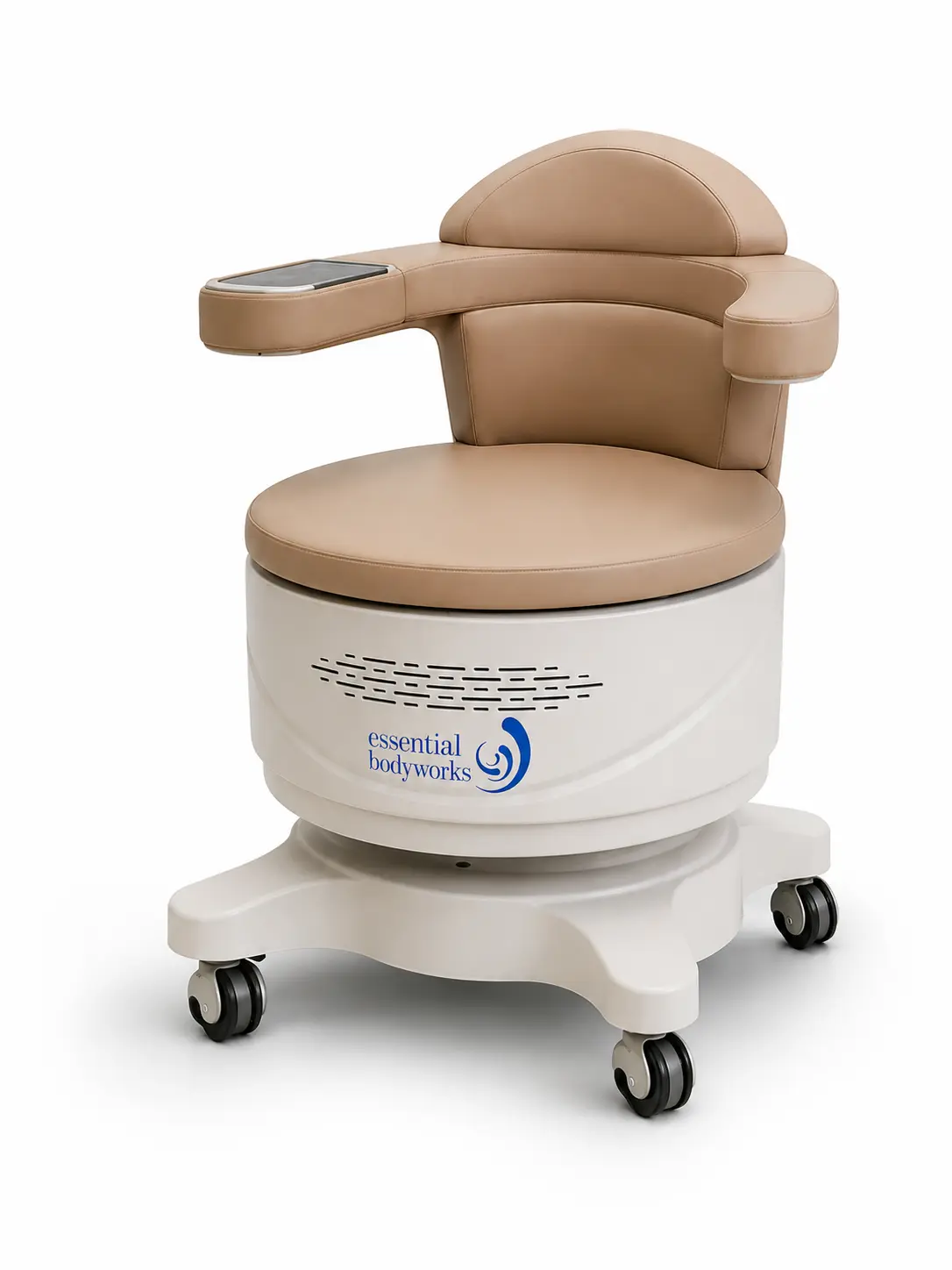
Pelvic Health Chair Treatment
Non-invasive, fully clothed pelvic-floor support for suitable, screened clients.
This page provides general pelvic-health, bladder-habit and wellbeing education. Essential Bodyworks focuses on supportive bladder strategies, pelvic-floor awareness, bowel wellbeing, breathing and appropriately screened pelvic health chair treatment. Individual suitability and response vary; where something is outside our scope, we will signpost appropriately.
pelvic health. whole body care. lasting confidence.
© Essential Bodyworks. All rights reserved.