If a cough, sneeze, laugh, jump, lift or burst of exercise causes a small leak of urine, you are not alone - and it is something you can actively support. This pattern is commonly known as stress urinary incontinence.
The word 'stress' refers to physical pressure rather than emotional stress. When pressure inside the abdomen rises suddenly, the bladder and urethra need enough support and closure to keep urine in. The pelvic floor is one important part of that system.
In this resource
- What happens when you cough or sneeze?
- Is it just a weak pelvic floor?
- Pelvic-floor muscle training
- The 'knack' - preparing for pressure
- What about exercise?
- Breathing and pressure management
- Constipation and bowel habits matter too
- Could the pelvic health chair help support your pelvic floor?
- Staying within the right support pathway
- Explore related pelvic-health resources
What happens when you cough or sneeze?
A cough or sneeze creates a rapid rise in pressure through the abdomen. The pelvic floor and other supporting structures normally respond to help support the bladder outlet. If that response is not strong, well-timed or well-coordinated enough for the pressure being created, urine may leak.
Pelvic-floor function can change through different stages of life. Pregnancy and birth, menopause, pelvic or prostate surgery, constipation and repeated straining, persistent coughing, changes in activity and other individual factors can all influence how the pressure-support system works. The useful question is not simply 'why am I leaking?' but 'what support will help my pelvic floor respond more effectively?'
Is it just a weak pelvic floor?
Not necessarily. Strength can matter, but timing, endurance, coordination and the ability to relax also matter. Some people struggle to identify the correct muscles; others may brace their abdomen, buttocks or thighs instead.
This is why simply being told to 'do your Kegels' is not always enough. Good pelvic-floor work includes awareness, an effective contraction, a full release, appropriate endurance and the ability to respond when pressure suddenly rises.
Pelvic-floor muscle training
Pelvic-floor muscle training is a well-established way of supporting stress urinary incontinence. The most useful programme is one that helps you find the right muscles, contract and relax them well, build endurance and faster responses, and then use that control in real life.
For men rebuilding continence after prostate surgery, pelvic-floor rehabilitation can also be an important part of recovery. Technique, consistency and gradual progression matter, and Essential Bodyworks can support the wider pelvic-health journey alongside any recovery plan already in place.
Training is more than repeatedly squeezing as hard as possible. It may include learning the correct contraction, fully relaxing between contractions, building endurance and faster responses, and gradually using the pelvic floor during the activities that usually trigger leakage.
The 'knack' - preparing for pressure
Some people find it helpful to gently activate the pelvic floor just before and during a predictable pressure event such as a cough, sneeze or lift. This can be thought of as preparing the support system before the pressure arrives.
The contraction should be comfortable enough that you can continue breathing rather than creating extra pressure by holding your breath. Think of it as a coordinated response rather than a hard squeeze.
What about exercise?
Leakage during running, jumping, gym work or lifting is a symptom, not proof that exercise is harmful. Often the activity can be modified while pelvic-floor capacity and coordination are developed.
Options can include temporarily adjusting impact, load, repetitions, range, recovery time, technique or breathing while pelvic-floor capacity develops. The aim is not to make movement frightening or permanently restrict the activities you enjoy, but to build confidence and function.
Breathing and pressure management
Breath-holding during effort can increase pressure through the abdomen and pelvic floor. Learning to coordinate breathing with movement can therefore complement pelvic-floor rehabilitation.
Constipation and bowel habits matter too
Repeated constipation and straining can add pressure through the pelvic floor. Supporting regular, comfortable bowel movements through appropriate fluids, fibre, movement and toileting habits can therefore be relevant to pelvic health.
Could the pelvic health chair help support your pelvic floor?
For stress urinary incontinence, the Essential Bodyworks pelvic health chair is a particularly relevant option to explore. It provides non-invasive pelvic-floor stimulation while you remain fully clothed and may be useful for appropriately screened women and men who want additional support with pelvic-floor activation, coordination and continence.
Published research on magnetic pelvic-floor stimulation is encouraging. Recent systematic reviews and meta-analyses have reported improvements in urinary-incontinence symptoms and quality of life, including a 2026 meta-analysis focused specifically on women with stress urinary incontinence. Research protocols and devices vary, so results cannot be promised for an individual - but the evidence supports presenting magnetic stimulation as a genuine conservative support option rather than an afterthought.
At Essential Bodyworks, the chair can sit alongside pelvic-floor exercises, breathing and everyday pressure-management strategies. Some clients may particularly value the fully clothed, non-invasive format or the additional stimulation when finding or activating the pelvic floor is difficult. Suitability is checked before treatment and progress can be reviewed against the symptoms and goals that matter to you.
Staying within the right support pathway
Essential Bodyworks focuses on pelvic-floor and wellbeing support. Our role is to understand the leakage pattern and your goals, screen appropriately and help you explore the support options that may fit you.
If something clearly falls outside our scope, we will say so and signpost appropriately. Urgent or unusual symptoms such as being unable to pass urine, significant unexplained blood in the urine or becoming acutely unwell should not be managed through a wellbeing service alone.
Where you are already receiving medical or specialist care, Essential Bodyworks pelvic-health support can sit alongside that existing plan.
Explore related pelvic-health resources
- How to Find & Exercise Your Pelvic Floor
- Urinary Urgency & Frequency
- Why Am I Getting Up at Night to Urinate?
- Pelvic-Floor Weakness: What Does It Really Mean?
- Pelvic-Floor Relaxation & Overactivity
- Constipation, Bowel Health & Your Pelvic Floor
- Pelvic-Floor Recovery Before & After Prostate Surgery
- Postnatal Pelvic Health & Recovery
- Pelvic Health Through Perimenopause, Menopause & Beyond
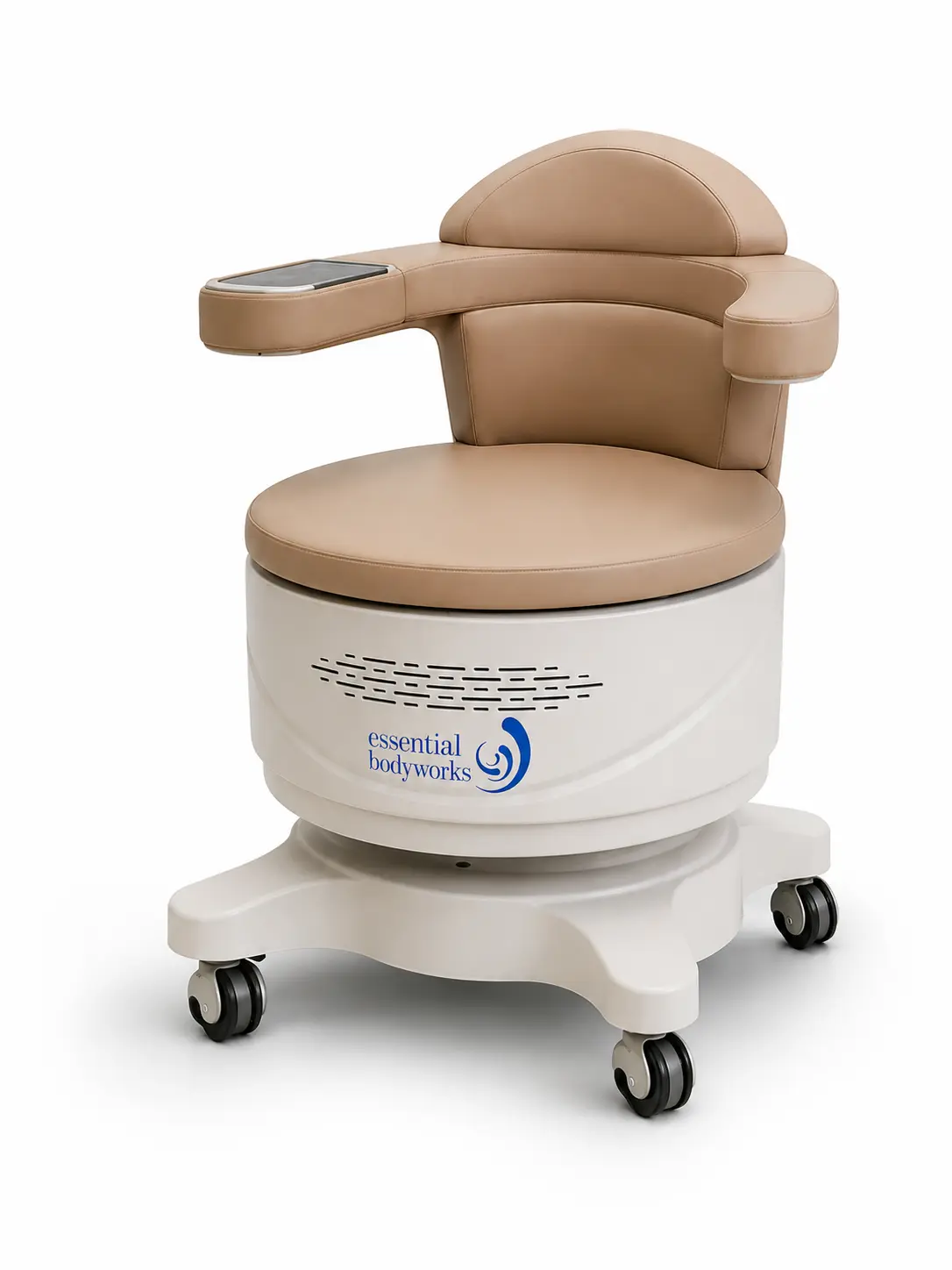
Pelvic Health Chair Treatment
Non-invasive, fully clothed pelvic-floor support for suitable, screened clients.
This page provides general pelvic-health and wellbeing education. Essential Bodyworks focuses on pelvic-floor awareness, continence support, breathing, bowel wellbeing and appropriately screened treatment options. We do not promise a particular outcome; individual responses and suitability vary. Where something is outside our scope, we will signpost appropriately.
pelvic health. whole body care. lasting confidence.
© Essential Bodyworks. All rights reserved.