
If you are preparing for prostate surgery or recovering afterwards, continence can become one of the biggest day-to-day concerns. Leakage with standing, walking, coughing, lifting or activity can be frustrating, but recovery often develops gradually rather than overnight.
Pelvic-floor rehabilitation is an established part of conservative care after prostatectomy. NICE recommends supervised pelvic-floor muscle training for men with stress urinary incontinence caused by prostatectomy and advises continuing the exercises for at least three months before considering other options.
At Essential Bodyworks, our aim is to complement that recovery journey. For suitable men, our pelvic-health chair provides a non-invasive, fully clothed way to add pelvic-floor stimulation to a wider rehabilitation plan. We cannot promise an individual outcome, but for an appropriately screened client who wants additional support, we believe it is a worthwhile option to consider and try.
In this resource
- Why can leakage happen after prostate surgery?
- Start with the foundations: pelvic-floor muscle training
- Before surgery
- After surgery — follow your surgical team's timing
- Where the Essential Bodyworks pelvic-health chair may fit
- What might we track?
- Real client experience will matter
- A practical recovery mindset
- What about erectile function and sexual recovery?
- Pelvic-floor support alongside your existing follow-up
- Who should be assessed before chair treatment?
- Supporting recovery as a whole
- Staying within the right support pathway
- Essential Bodyworks takeaway
- Explore related resources
Why can leakage happen after prostate surgery?
After radical prostatectomy, the urinary control system has to adapt to anatomical and functional changes created by surgery. Pelvic-floor muscles and the remaining continence mechanisms become especially important when pressure rises during coughing, standing, walking, lifting and other movement.
Some men regain control relatively quickly; for others, improvement takes months. The amount of leakage, pad use and recovery pattern vary between individuals.
Start with the foundations: pelvic-floor muscle training
Pelvic-floor exercises remain the foundation. The goal is not simply to squeeze as hard as possible, but to identify the correct muscles and develop useful strength, endurance, timing and relaxation.
If you are unsure whether you are finding the muscles correctly, or progress feels difficult to judge, additional guidance can help. The important point is quality rather than simply doing more repetitions: a useful contraction, normal breathing, full release and gradual progression all matter.
Before surgery
If your surgical team recommends pelvic-floor training before surgery, learning the correct technique in advance can make it easier to restart rehabilitation afterwards. Follow the timing and instructions given by your urology or pelvic-health team.
Do not allow a website programme or chair treatment to delay cancer treatment, investigations or surgical care.
After surgery — follow your surgical team's timing
Your surgeon or rehabilitation team should guide when pelvic-floor exercises can be resumed and progressed. Catheter removal, wound healing, complications and individual recovery all matter.
Do not start chair treatment immediately after surgery simply because leakage is present. Recent surgery is a screening issue and we will require the appropriate recovery interval and, where necessary, confirmation that treatment is suitable before proceeding.
Where the Essential Bodyworks pelvic-health chair may fit
For men who have moved beyond the immediate post-operative phase and are suitable after screening, the pelvic-health chair can offer an additional way to work with the pelvic-floor muscles.
The treatment is non-invasive and performed fully clothed. This can be appealing to men who feel uncomfortable with more intimate forms of pelvic-floor treatment, find it difficult to identify the muscles themselves, or simply want to explore an additional rehabilitation option alongside their exercises.
Current European urology guidance includes extracorporeal magnetic innervation among conservative approaches used for post-surgical male urinary incontinence, but it also states that uncertainty remains about the effectiveness and value of these interventions.
That is why our message is deliberately balanced: the chair is not a guaranteed cure and it does not replace your exercises, continence service or urology follow-up. But where there are no contraindications and the clinical context is appropriate, it is a reasonable non-invasive option to explore as part of an active recovery plan.
WORTH EXPLORING? Fully clothed • non-invasive • no internal probe • designed to stimulate pelvic-floor muscle activity • used only after pre-screening • intended as an adjunct, not a guaranteed cure.
What might we track?
Recovery is easier to understand when we look at trends rather than one good or bad day. With your consent, Essential Bodyworks may track simple outcomes before, during and after a course so that you and your practitioner can see whether meaningful change is occurring.
number of pads used in a typical 24-hour period
leakage during walking, standing, coughing, lifting or exercise
urinary frequency and night-time waking where relevant
confidence leaving the house, working, exercising or socialising
your own rating of bladder control and improvement
whether any improvement is maintained at follow-up
These measures help guide individual care and, where clients separately consent to anonymised use, may also help Essential Bodyworks build a transparent real-world picture of client experience. Positive and non-positive outcomes should both be recorded.
Real client experience will matter
As this service develops, we intend to share genuine client experiences — including short written or video testimonials where clients have given explicit permission.
Testimonials will describe what an individual experienced rather than promise what another person will achieve. Where we publish outcome summaries, they should clearly state the number of clients, what was measured and the time period involved.
A practical recovery mindset
Progress can be uneven. A more active day may temporarily mean more leakage even when your overall trend is improving. Pad use may fall gradually, and control during one activity may return before another.
Try to judge progress over weeks, not hours. Continue the rehabilitation recommended by your healthcare team and ask for help if you are unsure about technique or if continence is not improving as expected.
What about erectile function and sexual recovery?
Erectile and sexual changes after prostate cancer treatment deserve their own support. NICE recommends access to specialist erectile-dysfunction services after radical prostate-cancer treatment and lists established medical options where appropriate.
Pelvic-floor rehabilitation can sit within the wider recovery picture, but the chair is not presented as a treatment for erectile dysfunction. Where there is a separate continence, weakness or pelvic-floor activation need, chair treatment may still be relevant as part of overall pelvic-floor recovery. Sexual wellbeing is covered separately in Pack 15.
Pelvic-floor support alongside your existing follow-up
Pelvic-floor treatment does not replace cancer surveillance. Continue PSA blood tests, urology appointments and any other follow-up recommended by your prostate-cancer team.
A change in urinary symptoms should not automatically be assumed to be pelvic-floor weakness, particularly if there is blood in the urine, pain, difficulty emptying the bladder, infection symptoms or another new concern.
Who should be assessed before chair treatment?
Every client completes the Essential Bodyworks pelvic-health pre-screen before treatment. The practitioner will review prostate surgery and timing, current cancer follow-up, implanted devices or metal/electronic considerations, current symptoms, recent procedures and the full manufacturer/Jay contraindication framework already held within the clinic protocol.
Where the history raises uncertainty, we will ask for appropriate medical or pelvic-health clearance rather than guessing.
Supporting recovery as a whole
Recovery following prostate surgery involves more than the pelvic-floor muscles alone.
Rest, comfortable movement, good nutrition, hydration and emotional wellbeing all contribute to your overall recovery experience.
Pelvic-floor rehabilitation may help some men improve urinary control following prostate surgery. Learning how to gently activate and fully relax these muscles, alongside appropriate breathing and gradual activity, can be an important part of recovery.
Everyone's recovery is different. The timing and type of rehabilitation should follow advice from your surgical or healthcare team.
Where appropriate, Pelvic Health Chair Treatment may be considered as additional pelvic-floor support following individual screening and the necessary medical clearance. It does not treat prostate disease or cancer.
Staying within the right support pathway
Contact your urology, continence or GP team if leakage remains troublesome, recovery is not progressing as expected, or you develop new urinary symptoms. Seek prompt medical assessment for inability to pass urine, blood in the urine, fever or feeling unwell with urinary symptoms, significant pain, or other acute post-operative concerns.
Persistent stress incontinence also deserves specialist assessment. There are additional conservative and surgical options when pelvic-floor rehabilitation alone is not enough.
Essential Bodyworks takeaway
After prostate surgery, pelvic-floor recovery deserves active support and patience.
Keep pelvic-floor exercises and your medical follow-up at the centre of recovery. If you are medically ready and pass our screening process, the Essential Bodyworks pelvic-health chair offers another non-invasive way to engage with pelvic-floor rehabilitation.
We will never guarantee that it will make you dry or promise a particular number of sessions. We can offer a carefully screened opportunity to try it, measure your own progress and decide from your real experience whether it is helping you.
Explore related resources
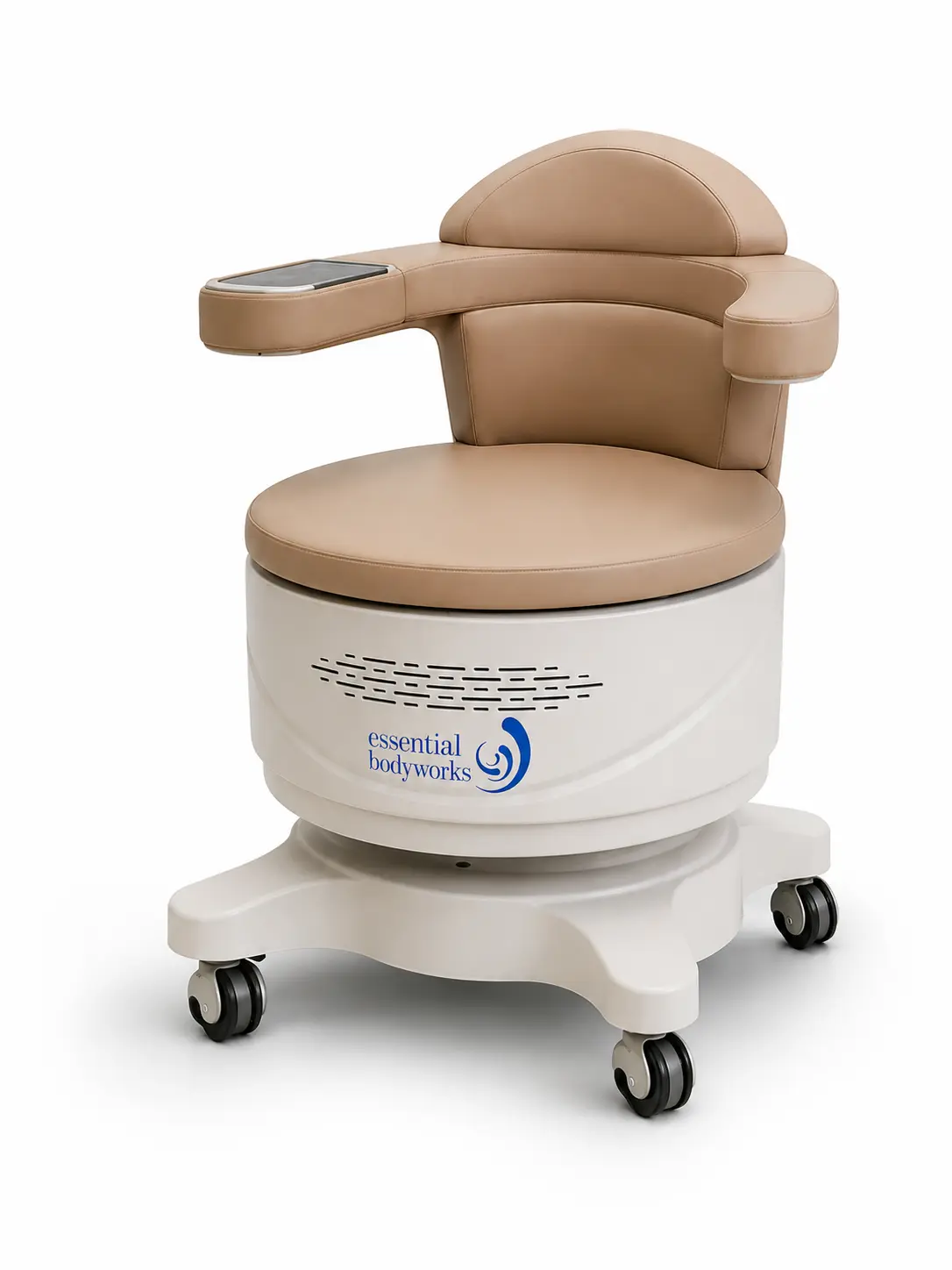
Pelvic Health Chair Treatment
Non-invasive, fully clothed pelvic-floor support for suitable, screened clients.
This page provides general pelvic-health and recovery education. Essential Bodyworks supports pelvic-floor awareness, continence recovery and appropriately screened pelvic health chair treatment before or after prostate surgery where suitable. Recovery and individual responses vary. Where something falls outside our scope, we will signpost appropriately.
pelvic health. whole body care. lasting confidence.
© Essential Bodyworks. All rights reserved.