
A feeling of heaviness, dragging or pressure in the vagina can be unsettling, particularly if you can also feel or see a bulge. One possible cause is pelvic organ prolapse, a change in the support around the pelvic organs.
Pelvic organ prolapse happens when one or more pelvic organs move downwards and bulge towards or into the vagina. It is common, particularly after childbirth and later in life. Some women have few symptoms, while others notice heaviness, pressure, bladder or bowel changes or reduced confidence with activity.
Understanding what you are feeling is a useful first step. If you have a new or unexplained bulge, an appropriate assessment can establish what is happening; from there, conservative pelvic-floor and wellbeing support may form an important part of the picture.
In this resource
- Which organs can be involved?
- What can prolapse feel like?
- Why can prolapse happen?
- What can support prolapse symptoms?
- Can strengthening the pelvic floor help?
- What is a vaginal pessary?
- Menopause and vaginal tissue health
- Constipation can make symptoms harder to manage
- Keep moving - with support rather than fear
- Could the pelvic health chair strengthen the support around a prolapse?
- Staying within the right support pathway
- Essential Bodyworks takeaway
- Explore related resources
Which organs can be involved?
The bladder, uterus (womb), top of the vagina after some types of surgery, or the rectum/bowel can contribute to a vaginal prolapse. More than one area can be involved at the same time.
You may hear terms such as anterior prolapse, posterior prolapse or uterine prolapse. These labels describe where support has changed; an examination is needed to establish what is actually happening.
What can prolapse feel like?
a feeling of heaviness, dragging, pressure or 'something coming down'
a lump or bulge that you can feel or see in or around the vagina
symptoms that become more noticeable after prolonged standing or later in the day
difficulty emptying the bladder fully, urinary frequency or leakage
constipation or difficulty emptying the bowel
discomfort or altered sensation during sex
The anatomical extent of a prolapse and the amount of bother it causes do not always match perfectly. What matters in everyday life is how you feel, how your bladder and bowel function, what activities you want to do and what kind of support helps you feel more comfortable and confident.
Why can prolapse happen?
Pelvic support can change over time. Pregnancy and childbirth, menopause and ageing, pelvic surgery, repeated constipation and straining, persistent coughing, higher body weight and repeated heavy physical loading can all contribute in some people.
Having one or more risk factors does not mean prolapse is inevitable, and having a prolapse does not mean you have done something wrong.
What can support prolapse symptoms?
There is more than one way to support prolapse. Depending on the individual, useful options can include pelvic-floor muscle training, comfortable bowel habits, reducing repeated straining, progressive movement and pressure management, and a vaginal pessary. Some women may eventually explore surgery, but prolapse does not automatically mean surgery is needed.
At Essential Bodyworks, our focus is on the conservative and wellbeing parts of that picture: helping you understand pelvic-floor function, bowel habits, movement and the additional support options that may be relevant to you.
Can strengthening the pelvic floor help?
Yes, pelvic-floor muscle training can improve symptoms and pelvic-floor function for some women with prolapse. Current research continues to support pelvic-floor training as an important conservative approach, with recent evidence reporting improvements in pelvic-floor muscle strength and aspects of pelvic support, while effects on anatomical prolapse stage are less consistent.
The aim is not to promise that strengthening will make an anatomical prolapse disappear. A better-functioning pelvic floor can contribute to support, control and confidence, which is why pelvic-floor training remains relevant even when the prolapse itself is still present.
Technique matters. The pelvic floor needs to contract effectively and also relax. If you cannot feel the muscles, or you are unsure whether you are lifting rather than bearing down, our related pelvic-floor education can help you understand the basics and identify when additional support may be useful.
What is a vaginal pessary?
A vaginal pessary is a removable support device placed inside the vagina by an appropriately trained healthcare professional. For some women it can reduce heaviness or bulging and provide useful mechanical support during everyday life or activity.
There are different shapes and sizes, so fitting and follow-up are individual. A pessary is one conservative option rather than something every woman with prolapse will need.
If a pessary is something you would like to explore, it can be discussed with an appropriate pelvic-health, gynaecology or urogynaecology service.
Menopause and vaginal tissue health
Around and after menopause, changes in vaginal and vulval tissues can occur alongside changes in pelvic-floor function. Our Perimenopause, Menopause & Beyond pathway explores pelvic-floor support, vaginal comfort, Herbal Medicine, Nutrition and wider wellbeing choices.
Local vaginal oestrogen is also an established prescribed option for genitourinary symptoms of menopause and may be discussed with an appropriate prescriber where relevant. Essential Bodyworks does not prescribe it, and it does not need to dominate the wider prolapse support conversation.
Constipation can make symptoms harder to manage
Repeated straining during bowel movements increases pressure through the pelvic floor and can make heaviness or pressure more noticeable. Supporting comfortable bowel emptying is therefore a practical part of looking after prolapse symptoms.
Focus on comfortable stool consistency, hydration that includes drinks and fluid-rich foods, fibre suited to you, movement and a supportive toilet position with the feet raised, knees above the hips and a gentle forward lean. The aim is to reduce unnecessary pushing and straining.
Keep moving - with support rather than fear
Having prolapse does not mean you need to stop moving, lifting or exercising. If a particular activity repeatedly increases heaviness or bulging, that is useful feedback: the load, breathing, technique, recovery or pelvic-floor support may need adapting while you build capacity.
The aim is not a permanent list of forbidden exercises. It is to help you stay active with greater confidence and understand how breathing, pressure management and pelvic-floor support can work together.
Could the pelvic health chair strengthen the support around a prolapse?
The Essential Bodyworks pelvic health chair does not 'put a prolapse back', repair connective tissue or replace a pessary or surgery where those options are needed. Its role is different: it stimulates the pelvic-floor muscles, so for an appropriately screened woman whose prolapse picture also includes pelvic-floor weakness or difficulty activating the muscles, it can be a worthwhile conservative support option to explore.
That matters because stronger, better-activated pelvic-floor muscles can contribute to pelvic support and symptom management. Pelvic-floor muscle training itself has evidence for improving symptoms and muscle function in women with prolapse. Research specifically showing that magnetic chair treatment improves prolapse is much more limited, so we present the chair as a way of supporting the muscles rather than as a treatment that corrects the prolapse anatomy.
The chair is non-invasive and fully clothed and can sit alongside active pelvic-floor exercises, bowel and pressure-management strategies and movement. It may be particularly useful to explore when a client finds it difficult to identify or activate the pelvic-floor muscles. Suitability remains individual, especially where pain, significant overactivity, emptying difficulty, recent surgery or other more complex symptoms are present.
Staying within the right support pathway
Essential Bodyworks focuses on pelvic-floor and wider wellbeing support. If you have a new or unexplained bulge, significant difficulty emptying your bladder or bowel, or another change that needs assessment outside our scope, we will explain that and signpost appropriately. Where you are already receiving pelvic-health or medical care, Essential Bodyworks support can sit alongside it.
Urgent or clearly concerning changes - such as being unable to pass urine, significant unexpected bleeding, severe rapidly worsening pain or becoming acutely unwell - should not be managed through a wellbeing service alone.
Essential Bodyworks takeaway
Prolapse is a change in pelvic support, not a personal failure and not automatically a surgical problem.
There are practical ways to support the wider system: pelvic-floor strengthening and coordination, comfortable bowel habits, symptom-aware movement, pressure management and, for appropriately screened women, the Essential Bodyworks pelvic health chair where weakness or activation difficulty is relevant. Pessaries and other medical options remain available where they suit the individual.
Our aim is to help you build support, confidence and comfortable function without promising that any wellbeing treatment will anatomically 'fix' a prolapse.
Explore related resources
- Constipation, Bowel Health & Your Pelvic Floor
- How Do I Find & Exercise My Pelvic Floor?
- Pelvic-Floor Weakness: What Does It Really Mean?
- Pelvic-Floor Overactivity & Relaxation
- Why Do I Leak When I Cough or Sneeze?
- Urinary Urgency & Frequency
- Postnatal Pelvic Health & Recovery
- Pelvic Health Through Perimenopause, Menopause & Beyond
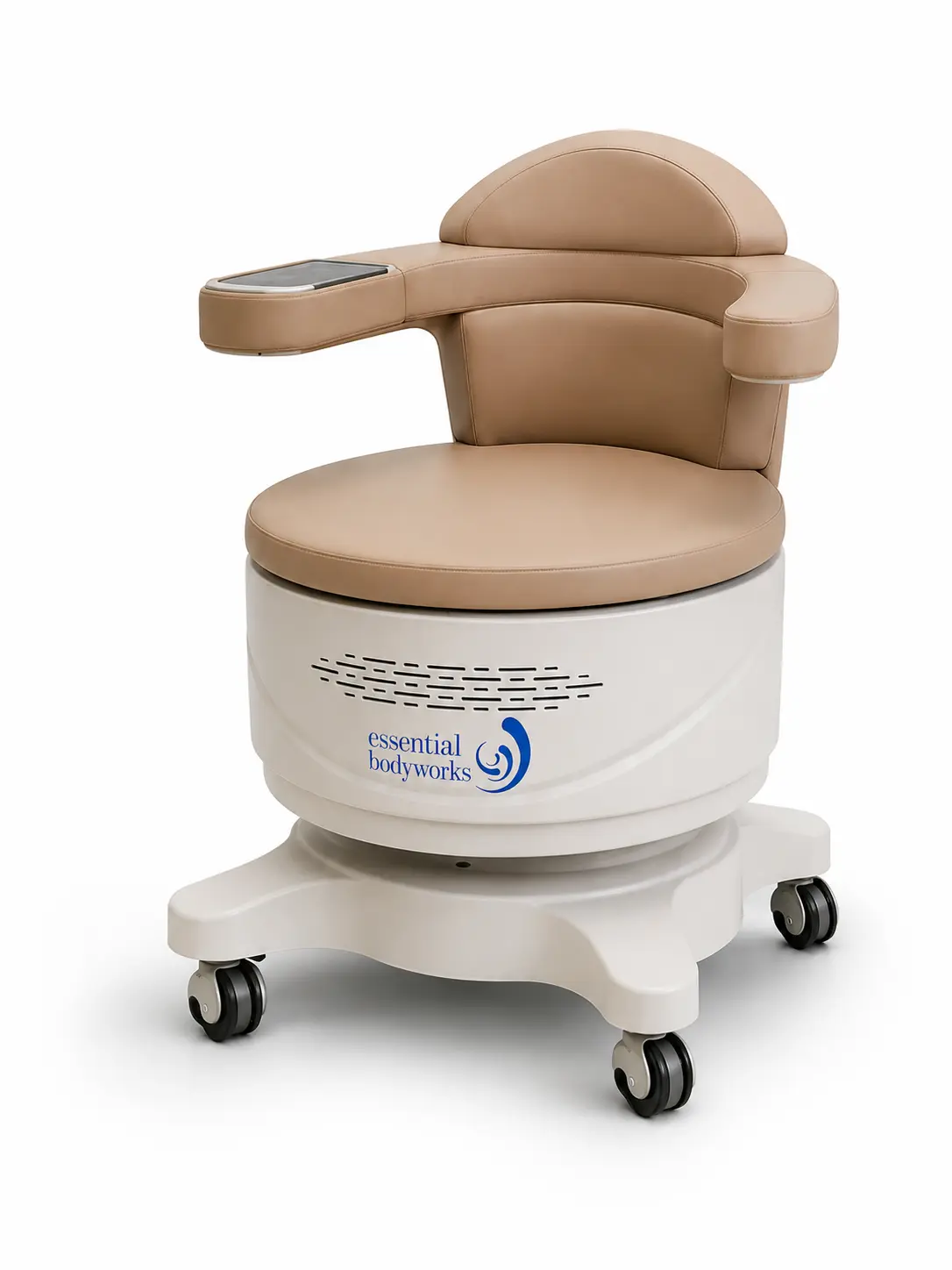
Pelvic Health Chair Treatment
Chair treatment may be considered only where pelvic-floor weakness is identified; it is not a treatment for prolapse.
This page provides general pelvic-health and wellbeing education. Essential Bodyworks focuses on pelvic-floor function, bowel wellbeing, movement, Nutrition and appropriately screened pelvic health chair treatment. Prolapse and treatment needs vary; where something falls outside our scope, we will signpost appropriately.
pelvic health. whole body care. lasting confidence.
© Essential Bodyworks. All rights reserved.