Sexual wellbeing is part of whole-body wellbeing, and pelvic health can influence comfort, confidence and intimacy. Changes in sensation, dryness, leakage, pelvic-floor tension, erection or orgasm, or worries about bladder and bowel symptoms can all affect how someone feels about closeness and sexual activity.
There is no single definition of a 'normal' sex life. What matters is your comfort, your choices and whether a change is affecting something that matters to you.
In this resource
- The pelvic floor has a role in sexual function
- Pain during sex or penetration
- Menopause, dryness and discomfort
- After pregnancy and childbirth
- Leakage and confidence during intimacy
- Men's sexual wellbeing and the pelvic floor
- What if my pelvic floor feels 'too tight'?
- Breathing, safety and relaxation
- What about libido?
- Communication matters too
- Could the pelvic health chair be relevant?
- Staying within the right support pathway
- Essential Bodyworks takeaway
- Explore related resources
The pelvic floor has a role in sexual function
The pelvic-floor muscles contribute to support, continence and sexual function. They need to respond and contract when appropriate, but also relax sufficiently for comfortable penetration, bladder and bowel emptying and rest.
That is why sexual symptoms should not automatically be interpreted as pelvic-floor weakness. For some people, excessive tension or poor relaxation is more relevant; for others, hormonal, surgical, vascular, neurological, medication-related or psychological factors may be involved.
Pain during sex or penetration
Pain with intercourse, penetration, tampons or intimate examination can sometimes involve pelvic-floor guarding or difficulty relaxing. Other tissue, hormonal, gynaecological or pelvic-health factors can also contribute, so the useful starting point is understanding the pattern rather than assuming the muscles simply need strengthening.
If pain is persistent, new, worsening, associated with bleeding or unusual discharge, or affecting your wellbeing, individual assessment can help clarify what support is appropriate.
Menopause, dryness and discomfort
During perimenopause and after menopause, hormonal changes can contribute to vaginal and vulval dryness, irritation, urinary symptoms and discomfort during intimacy. These changes are common, but they do not have to be accepted without support.
Lubricants and vaginal moisturisers are options some women find useful for comfort. Local vaginal oestrogen is another established option for genitourinary symptoms of menopause and can be discussed with an appropriate prescriber where relevant.
Essential Bodyworks also offers Herbal Medicine and Nutrition for women who want to explore broader, individualised wellbeing support through perimenopause and menopause. Herbal choices can be discussed as part of that wider approach. We do not describe herbs as 'natural HRT' or promise that they will correct a particular hormone level or sexual symptom.
After pregnancy and childbirth
After childbirth, sexual comfort and confidence can change while the body recovers and adapts. Healing, scar sensitivity, pelvic-floor changes, vaginal dryness - particularly while breastfeeding - tiredness, body changes and the emotional adjustment to caring for a baby can all play a part.
There is no deadline for returning to sex. Give recovery the time it needs, communicate about comfort and let intimacy progress at a pace that feels right. If pain, wound concerns, bleeding or significant pelvic-floor symptoms continue, additional postnatal or pelvic-health support can help.
Leakage and confidence during intimacy
Bladder or bowel leakage can understandably affect sexual confidence. If leakage occurs during intimacy, it may be useful to assess the wider continence pattern rather than treating the sexual situation in isolation.
Pelvic-floor rehabilitation, bladder or bowel strategies and management of constipation or urgency may be relevant depending on the underlying pattern.
Men's sexual wellbeing and the pelvic floor
For men, pelvic health and sexual wellbeing can be influenced by pelvic pain, urinary symptoms, prostate changes and recovery after prostate treatment. Pelvic-floor rehabilitation can be particularly useful for continence and pelvic-floor control after prostate surgery, while erection, orgasm and ejaculation changes may involve other factors as well.
Sexual recovery after prostate treatment is individual. Our Men's Pelvic Health and Prostate Surgery Recovery resources focus on pelvic-floor awareness, continence, confidence and supportive recovery without reducing sexual wellbeing to a single measure of pelvic-floor strength.
What if my pelvic floor feels 'too tight'?
If penetration is painful or you notice persistent pelvic gripping, more Kegels are not automatically the answer. Relaxation, breathing, coordination and understanding what is driving the tension may be more useful than simply adding stronger contractions.
Pelvic-floor exercises should feel purposeful rather than forced through pain. Where more individual guidance is needed, an appropriately qualified pelvic-health professional can help clarify whether the priority is relaxation, strengthening, scar support, coordination or another approach.
Breathing, safety and relaxation
Comfort and arousal are influenced by many things, including how safe, relaxed and connected you feel in your body. Calm breathing, body awareness and reducing unnecessary abdominal or pelvic gripping can be useful supportive strategies where stress or guarding is part of the picture.
The aim is not to 'breathe away' a sexual problem, but to create more awareness and space for relaxation as one part of wider pelvic and sexual wellbeing.
What about libido?
Sexual desire can change through life and can be influenced by hormones, comfort, sleep, stress, relationships, medicines, illness and how someone feels in their body. A change in libido does not automatically mean something is wrong, but it is reasonable to explore it if it matters to you.
Around menopause, changes in desire may sit alongside sleep disturbance, vaginal discomfort, stress and wider hormonal changes. There are different ways of approaching this depending on the individual, including medical options where wanted as well as wider wellbeing support.
At Essential Bodyworks, Herbal Medicine and Nutrition can be explored as genuine individualised wellbeing choices. The focus may include overall menopausal wellbeing, energy, sleep, stress, nutrition and how someone is feeling more broadly. These services are not presented as guaranteed treatments for low libido, erectile dysfunction or painful sex.
Communication matters too
Pelvic symptoms can affect confidence and relationships. Going slowly, communicating about comfort, allowing enough time for arousal, using appropriate lubrication where needed and removing pressure to continue through pain can all support a more comfortable experience.
If fear, distress, relationship difficulties or previous painful experiences are a major part of the picture, additional specialist support can also sit alongside physical pelvic-health and wellbeing care where wanted.
Could the pelvic health chair be relevant?
The pelvic health chair is not a treatment for low libido, erectile dysfunction, vaginal dryness or painful sex itself. Its relevance is the pelvic floor.
If the wider picture includes pelvic-floor weakness, reduced activation, stress leakage or another suitable pelvic-floor support need, an appropriately screened client may still wish to explore the Essential Bodyworks pelvic health chair. Strengthening and improving activation can support pelvic-floor function and confidence, even though we do not promise a particular sexual outcome.
If pain, persistent gripping or difficulty relaxing is the dominant pattern, more stimulation may not be the right starting point. Chair suitability is therefore based on the whole presentation, the Essential Bodyworks pre-treatment questionnaire, contraindication screening and current manufacturer/clinic guidance.
Staying within the right support pathway
Essential Bodyworks focuses on pelvic-floor education and wider wellbeing support. If sexual or pelvic symptoms are persistent, changing or fall outside our scope, we will explain that and signpost appropriately. Where you are already receiving medical, pelvic-health or specialist care, our support can sit alongside it.
Important symptoms such as severe or rapidly worsening pelvic or testicular pain, heavy or unexplained bleeding, inability to pass urine, or becoming acutely unwell with pelvic or genital symptoms need prompt medical assessment rather than wellbeing support alone.
Essential Bodyworks takeaway
Sexual wellbeing is not separate from pelvic health - and it is not explained by the pelvic floor alone.
Our approach is to recognise the whole picture: comfort, pelvic-floor function, bladder and bowel wellbeing, life-stage changes, recovery after childbirth or prostate treatment, and emotional wellbeing. Support should be individual, respectful and choice-led, with strengthening, relaxation, Breathwork, Herbal Medicine, Nutrition or the pelvic health chair used where they genuinely fit the person's needs.
Explore related resources
- Pelvic Pain: When Should I Seek Help?
- Pelvic-Floor Overactivity & Relaxation
- How Do I Find & Exercise My Pelvic Floor?
- Pelvic Health Through Perimenopause, Menopause & Beyond
- Postnatal Pelvic Health & Recovery
- Men's Pelvic Health
- Pelvic-Floor Recovery Before & After Prostate Surgery
- Why Do I Leak When I Cough or Sneeze?
- Urinary Urgency & Frequency
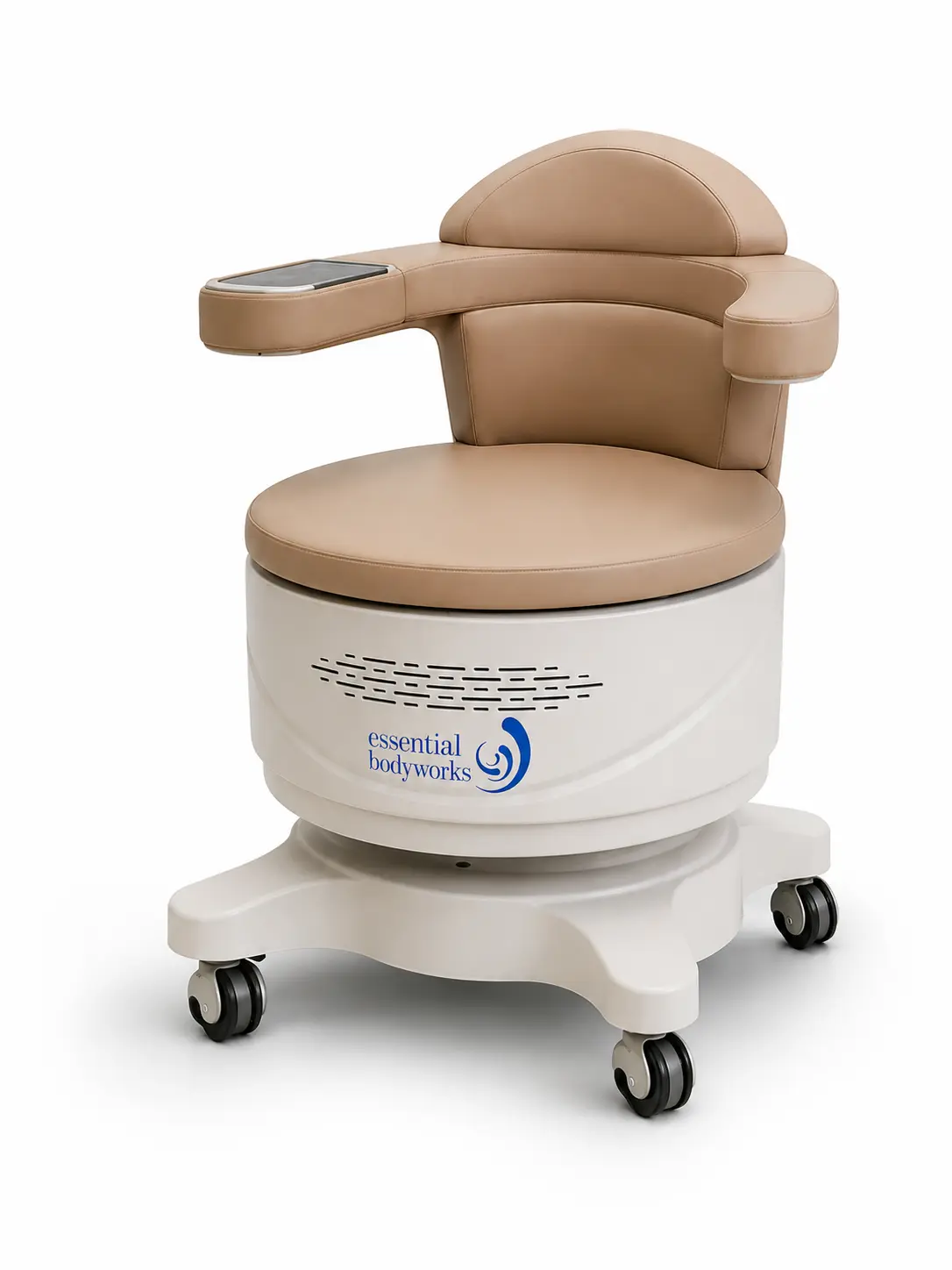
Pelvic Health Chair Treatment
Chair treatment is relevant only where a separate pelvic-floor indication is identified; it is not a treatment for sexual symptoms themselves.
This page provides general pelvic-health, sexual-wellbeing and lifestyle education. Essential Bodyworks can support pelvic-floor awareness, breathing and relaxation, menopause wellbeing, Nutrition, Herbal Medicine and appropriately screened pelvic-floor options. Where something falls outside our scope, we will signpost appropriately.
pelvic health. whole body care. lasting confidence.
© Essential Bodyworks. All rights reserved.