Your pelvic floor works quietly in the background every day. It contributes to bladder and bowel control, pelvic-organ support, sexual function and the way your body manages changes in pressure when you cough, lift, exercise or move.
Like other muscles, it benefits from appropriate training — but pelvic health is about more than squeezing. A healthy pelvic floor needs strength, endurance, timing, coordination and the ability to relax.
The best time to learn about pelvic health is not necessarily after a problem begins. Prevention, awareness and early support can all form part of looking after yourself across the lifespan.
In this resource
- The Essential Bodyworks Pelvic Health for Life framework
- 1. Train — but train the right thing
- 2. Breathe — manage pressure, don't live in a brace
- 3. Empty — protect your pelvic floor through good bowel habits
- 4. Move — your pelvic floor is part of an active body
- 5. Notice — know the early signals
- 6. Act early — don't wait for symptoms to become severe
- Pelvic health changes through life
- Can the pelvic-health chair be part of long-term pelvic care?
- Small habits that support lifelong pelvic health
- Prevention does not mean perfection
- A simple Pelvic Health Check-In
- Essential Bodyworks takeaway
- Explore the Pelvic Health Hub
The Essential Bodyworks Pelvic Health for Life framework
We think of long-term pelvic health through six connected habits:
TRAIN — know how to contract and relax your pelvic floor correctly.
BREATHE — avoid unnecessary bracing and coordinate effort with breathing.
EMPTY — support comfortable bladder and bowel habits without repeated straining.
MOVE — stay active and build physical capacity progressively.
NOTICE — pay attention to leakage, urgency, heaviness, pain or changes in emptying.
ACT EARLY — respond to changes while they are manageable rather than accepting persistent symptoms as 'just ageing' or 'just something you live with'.
1. Train — but train the right thing
Pelvic-floor training can be useful across the lifespan. The aim is not to do endless squeezes, but to build useful strength, endurance, timing and coordination while keeping the ability to relax fully.
Training should include both contraction and release. If you are unsure whether you are finding the right muscles, or exercises seem to increase urgency, pressure, pain or difficulty emptying, extra guidance can help you choose a better starting point rather than simply adding more repetitions.
2. Breathe — manage pressure, don't live in a brace
Your pelvic floor works as part of a wider pressure-management system with your diaphragm, abdominal wall and trunk. Everyday movement does not require you to grip the pelvic floor continuously.
During effort, avoiding unnecessary breath-holding and learning to coordinate breathing with movement can help you use pressure more efficiently. At rest, the pelvic floor also needs permission to release.
3. Empty — protect your pelvic floor through good bowel habits
Repeated constipation and straining can increase pressure through the pelvic floor, so comfortable stool consistency and bowel-emptying habits are an important part of long-term pelvic wellbeing.
A balanced diet, suitable fluids, fluid-rich foods such as fruit and vegetables, fibre suited to you, regular movement and a supported toileting position can all contribute to easier bowel emptying.
4. Move — your pelvic floor is part of an active body
Staying physically active supports whole-body health and helps us maintain strength and capacity. There is no single exercise style that everyone needs for pelvic-floor health, so the emphasis is on movement you enjoy, sensible progression and responding to the feedback your body gives you.
If running, jumping, lifting or another activity repeatedly triggers leakage, heaviness, pain or bulging, that does not automatically mean you must stop forever. It is a useful signal to review technique, load, pressure management and pelvic-floor function.
Where symptoms are present, adjusting load, impact, breathing, repetitions or recovery can be more useful than a blanket list of movements to avoid.
5. Notice — know the early signals
Pelvic-floor symptoms worth noticing include:
leakage of urine, stool or wind
urinary urgency, frequency or repeated night-time waking
a feeling of heaviness, dragging or vaginal bulging
difficulty emptying the bladder or bowel
pelvic or perineal pain
pain during sex or penetration
a persistent feeling of pelvic-floor gripping or inability to relax
changes following pregnancy, childbirth, menopause, pelvic surgery or prostate treatment
These changes are worth noticing because they give you useful information about what your pelvic floor may need. They do not automatically mean something is seriously wrong.
6. Act early — don't wait for symptoms to become severe
Early support may be as simple as improving pelvic-floor technique, breathing, bowel habits or the way you respond to urgency. Sometimes a different type of pelvic-health support is more appropriate. The aim is to find the pathway that fits the pattern rather than waiting until symptoms have become a bigger part of everyday life.
The Hub is designed to help you recognise those patterns, explore relevant Essential Bodyworks support and understand when something falls outside our scope.
Pelvic health changes through life
Pelvic-floor needs are not fixed. Pregnancy and childbirth, hormonal changes through perimenopause and menopause, ageing, changes in activity, illness, surgery and prostate treatment can all change the demands placed on the pelvic floor.
That is why a programme that suited you five years ago may not be the right programme today. Checking in and adapting is part of looking after pelvic health for life.
Can the pelvic-health chair be part of long-term pelvic care?
For suitable clients, yes. It can be a positive option within a wider long-term pelvic-health plan.
The Essential Bodyworks pelvic health chair provides non-invasive pelvic-floor stimulation while you remain fully clothed. For people with weakness, reduced activation or relevant continence symptoms, it can offer additional muscle stimulation alongside their own exercises and everyday pelvic-health habits.
The chair does not replace learning how to use your pelvic floor yourself, and individual responses vary. Suitability depends on the presentation: where pain, significant overactivity, recent surgery or another issue makes stimulation inappropriate, we will explain that and signpost accordingly.
For clients who respond well and remain suitable, future maintenance sessions may also be worth exploring. Rather than prescribing the same lifelong schedule for everyone, maintenance can be guided by individual goals, response, updated screening, current protocol and the person's own experience of what helps them maintain function.
YOUR PELVIC HEALTH, YOUR BASELINE. Interested in understanding where you are now? Complete the Essential Bodyworks pre-screen and explore whether education, self-directed exercises, a structured chair course or later maintenance support could fit your pelvic-health goals.
Small habits that support lifelong pelvic health
Looking after your pelvic floor is part of looking after your whole body.
Regular movement, nourishing meals, sufficient fluids, comfortable bowel habits, restorative sleep and time to manage stress all contribute to general wellbeing.
Your pelvic-floor muscles also benefit from balance. They need to respond to everyday demands, work alongside your breathing and abdominal muscles, and relax fully when appropriate.
There is no single routine that suits everyone. Small, sustainable habits and an understanding of your own body can help you feel more confident in supporting your pelvic health throughout life.
Prevention does not mean perfection
No routine or treatment can guarantee that pelvic-floor symptoms will never occur. Pelvic health changes through life, and pregnancy, menopause, surgery, prostate treatment, activity, ageing and other individual factors can all influence what your body needs.
The aim is not to make people anxious about every cough, lift or trip to the toilet. It is to give you useful skills, build confidence and make it easier to respond when your body starts giving you signals.
A simple Pelvic Health Check-In
Every so often, ask yourself:
Can I contract my pelvic floor — and can I fully let it go?
Am I leaking urine, stool or wind?
Am I rushing to the toilet or getting up repeatedly at night?
Can I empty my bladder and bowel comfortably?
Do I feel pelvic heaviness, bulging, pain or persistent tension?
Has sex or intimacy become uncomfortable because of pelvic symptoms?
Have pregnancy, menopause, surgery, prostate treatment or another health change altered my pelvic function?
If something has changed, use the relevant Hub resource and consider what kind of support would be useful rather than assuming it is simply part of getting older.
Essential Bodyworks takeaway
Pelvic health for life is not about doing hundreds of Kegels. It is about having a pelvic floor that can respond to your life.
Train it, let it relax, support your bowel and bladder habits, stay active and notice changes. If you are suitable and would like additional non-invasive support, our pelvic health chair can be one of the tools available to you — including, for some clients who respond well, as part of an individual maintenance plan.
Explore the Pelvic Health Hub
- How Do I Find & Exercise My Pelvic Floor?
- Pelvic-Floor Weakness: What Does It Really Mean?
- Pelvic-Floor Overactivity & Relaxation
- Constipation, Bowel Health & Your Pelvic Floor
- Prolapse, Heaviness & Pelvic Pressure
- Pelvic Pain: When Should I Seek Help?
- Pelvic Health & Sexual Wellbeing
- Women's Pelvic Health pathways
- Men's Pelvic Health pathways
- Pelvic-Floor Recovery Before & After Prostate Surgery
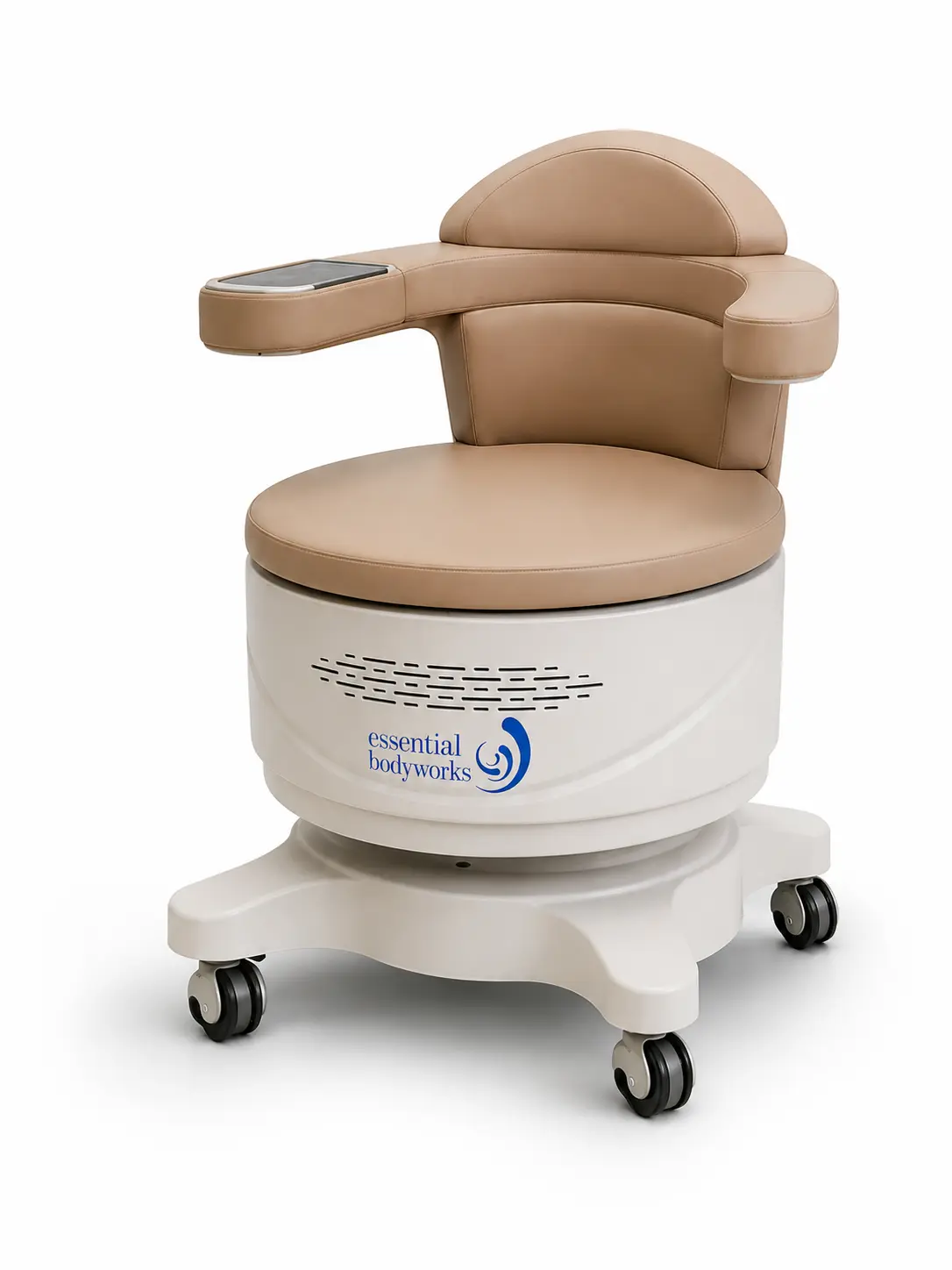
Pelvic Health Chair Treatment
Non-invasive, fully clothed pelvic-floor support for suitable, screened clients.
This page provides general pelvic-health and wellbeing education. Essential Bodyworks supports pelvic-floor awareness, breathing, bowel wellbeing, movement and appropriately screened pelvic health chair treatment. Pelvic-floor needs and responses vary; where something falls outside our scope, we will signpost appropriately.
pelvic health. whole body care. lasting confidence.
© Essential Bodyworks. All rights reserved.