
Nocturia is the medical term for waking from sleep to pass urine. An occasional night-time toilet visit may not be a problem, but repeated waking can disrupt sleep, affect daytime energy and become frustrating.
Nocturia is a symptom rather than a diagnosis. The important question is not only 'how many times do I get up?' but also 'why is this happening?' The answer can be different from one person to another.
In this resource
- Why can nocturia happen?
- Could it be my prostate?
- What about menopause?
- A bladder diary can help answer the 'why'
- Should I stop drinking in the evening?
- Swollen ankles can sometimes be part of the picture
- Constipation and bowel health
- Can pelvic-floor exercises help?
- Could the pelvic health chair be relevant?
- Staying within the right support pathway
- Explore related resources
Why can nocturia happen?
Some people produce a larger proportion of their urine during the night. Others have a bladder that is storing smaller amounts, an overactive or irritated bladder, or difficulty emptying fully. Sometimes a person wakes because of pain, anxiety, insomnia or another sleep disturbance and then goes to the toilet because they are already awake.
Evening drinking patterns, caffeine or alcohol, some medicines, menopause-related changes, prostate/lower urinary-tract changes, swollen ankles and other health factors can also influence night-time urination. This is why the useful question is not simply whether your pelvic floor is 'weak', but what your overall pattern looks like.
Could it be my prostate?
For men, nocturia can occur as part of lower urinary tract symptoms associated with an enlarged prostate. The prostate sits below the bladder and surrounds the urethra; when it enlarges it can affect the way urine flows.
If night-time urination appears alongside a weaker or stop-start stream, difficulty starting, a feeling that the bladder has not emptied, post-urination dribbling or increased daytime urgency/frequency, it is useful to consider the wider lower-urinary-tract pattern rather than nocturia in isolation.
Prostate enlargement becomes more common with age, but nocturia on its own does not tell you what is happening with the prostate. Our Men's Pelvic Health resources explain pelvic-floor and prostate-related recovery support in more detail.
What about menopause?
For women in perimenopause and beyond, night-time urination can occur alongside urgency, frequency and genitourinary changes. Our Perimenopause, Menopause & Beyond pathway explores pelvic-floor strength and relaxation, bladder confidence, vaginal comfort, Herbal Medicine, Nutrition and the pelvic health chair where relevant.
A bladder diary can help answer the 'why'
A bladder diary records what and when you drink, when you pass urine, approximate urine volumes, urgency and leakage. Including night-time entries can help show whether you are producing larger volumes overnight, passing small amounts frequently, or simply waking for another reason and then choosing to use the toilet.
Recording several typical days gives a much more useful picture than trying to remember your pattern afterwards. The same future Essential Bodyworks three-day bladder diary can be used alongside both this page and Pack 07 Urinary Urgency & Frequency.
Should I stop drinking in the evening?
Reducing very large drinks close to bedtime may help some people, but good hydration is not about deliberately dehydrating yourself. It is also not necessary to think of hydration only as glasses of plain water: fluid-rich foods such as cucumber, watermelon and other fruit and vegetables can contribute to overall fluid intake as part of a balanced diet.
Caffeine and alcohol can influence urine production or bladder symptoms for some people, so noticing your own timing and response can be useful. If you take prescribed medicines such as diuretics, keep to the instructions you have been given rather than changing the timing yourself.
Swollen ankles can sometimes be part of the picture
Fluid can collect in the legs during the day and move back into the circulation after lying down, which can increase night-time urine production for some people. If swelling is new, unexplained or accompanied by breathlessness or feeling unwell, that sits outside a wellbeing service and should be appropriately checked.
Constipation and bowel health
Constipation and repeated straining can affect the pelvic floor and may contribute to bladder symptoms. Supporting comfortable bowel habits through food, fluids, movement and toileting position can therefore be part of the wider pelvic-health picture.
Can pelvic-floor exercises help?
That depends on the wider pattern. If nocturia occurs alongside leakage, urgency or reduced pelvic-floor control, pelvic-floor awareness and training may form part of your support. If the main issue is increased night-time urine production, sleep disruption or difficulty emptying the bladder, strengthening alone is unlikely to explain the whole picture.
Healthy pelvic-floor function includes both contraction and relaxation. The aim is to understand whether your pelvic floor is actually part of your night-time bladder pattern rather than automatically adding more squeezing exercises.
Could the pelvic health chair be relevant?
Nocturia on its own is not an automatic reason for pelvic health chair treatment. However, if night-time waking sits alongside urgency, leakage, pelvic-floor weakness or difficulty activating the muscles, the Essential Bodyworks pelvic health chair may be an additional option worth exploring after screening.
The chair provides non-invasive pelvic-floor stimulation while you remain fully clothed. Suitability is based on the whole symptom pattern, including bladder emptying, urgency/frequency, leakage, pelvic-floor contraction and relaxation, relevant health history and contraindications. This keeps the chair positively available where the pelvic floor is genuinely part of the picture without suggesting that stimulation treats every cause of nocturia.
Where suitable, chair treatment can sit alongside bladder strategies, pelvic-floor awareness, Nutrition, bowel wellbeing and other relevant Essential Bodyworks support. Individual response varies and no particular nocturia outcome is promised.
Staying within the right support pathway
Essential Bodyworks focuses on pelvic-floor, bladder-habit and wider wellbeing support. If something falls outside our scope, we will explain that and signpost appropriately.
Urgent or clearly concerning symptoms - such as being unable to pass urine, significant unexplained blood in the urine, or becoming acutely unwell with urinary symptoms - should not be managed through a wellbeing service alone.
Explore related resources
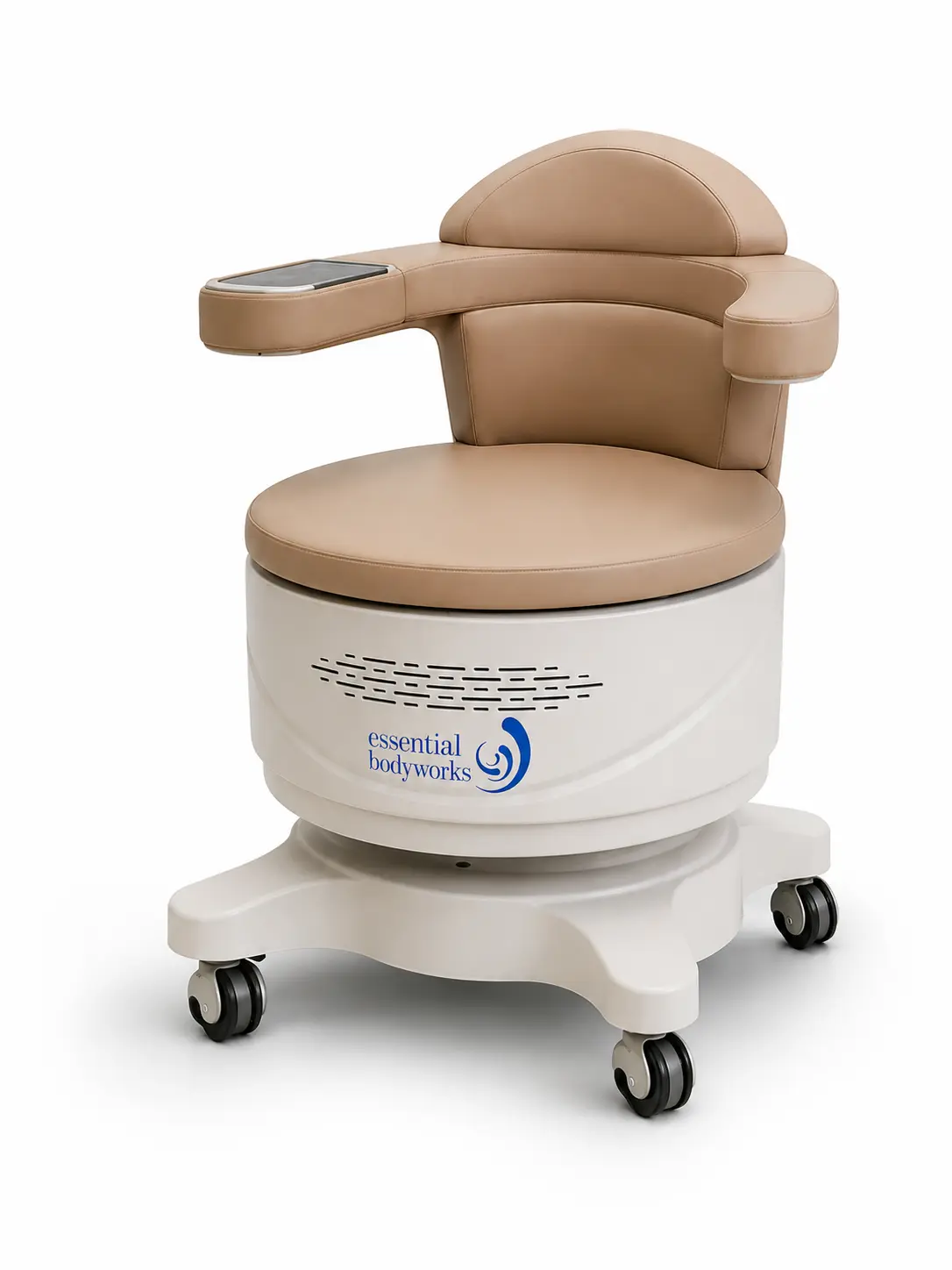
Pelvic Health Chair Treatment
Chair treatment is a secondary option only where a relevant pelvic-floor indication is identified.
This page provides general pelvic-health, bladder-habit and wellbeing education. Essential Bodyworks can support bladder awareness, hydration and Nutrition, bowel wellbeing, Breathwork and appropriately screened pelvic-floor options. Nocturia can have different contributors; where something falls outside our scope, we will signpost appropriately.
pelvic health. whole body care. lasting confidence.
© Essential Bodyworks. All rights reserved.