Pelvic health is for men too. The male pelvic floor is an important group of muscles involved in bladder and bowel control, sexual function, support and everyday movement. Understanding it can help men feel more confident about looking after pelvic health through different stages of life.
Pelvic-floor symptoms can arise for different reasons, including prostate treatment, bladder or bowel changes, constipation, persistent coughing, lifting and other health conditions. The most useful approach is to understand the pattern of symptoms and pelvic-floor function rather than assuming every problem simply needs more strengthening.
In this resource
- Where is the male pelvic floor?
- Bladder symptoms men may experience
- Prostate health and the pelvic floor
- Looking after your prostate and pelvic health
- Pelvic-floor recovery before and after prostate surgery
- Learning to contract the right muscles
- Strength is not always the whole answer
- Breathing, lifting and everyday activity
- Bowel health, constipation and the pelvic floor
- Sexual function and pelvic health
- Pelvic pain deserves assessment
- Could the pelvic health chair be part of your support plan?
- Can the Pelvic Health Chair help with prostate problems?
- Staying within the right support pathway
- Explore Men’s Pelvic Health
Where is the male pelvic floor?
The male pelvic-floor muscles stretch from the pubic bone at the front of the pelvis towards the base of the spine, forming a supportive muscular layer beneath the bladder and bowel. They help control urine and bowel movements and also contribute to erectile function.
Bladder symptoms men may experience
Pelvic-floor function can be relevant to several urinary symptoms, including leakage with coughing, sneezing, bending, lifting or exercise; sudden urgency; going frequently; waking several times at night; dribbling after urinating; and leakage associated with sexual arousal or orgasm.
Bladder symptoms can have different causes, and pelvic-floor function is only one part of the picture. This Hub focuses on helping men understand pelvic-floor function, supportive everyday strategies and the options available through Essential Bodyworks.
Prostate health and the pelvic floor
The prostate sits below the bladder and surrounds part of the urethra, so changes involving the prostate or recovery after prostate treatment can affect urinary and pelvic-floor function. Pelvic-floor support can be useful before and after treatment and can also help men understand and reconnect with this often-overlooked muscle group.
Essential Bodyworks focuses on pelvic-floor and wellbeing support rather than diagnosing prostate conditions. If you are already under medical care, our pelvic-health support can sit alongside your existing plan.
Looking after your prostate and pelvic health
Men's pelvic health is influenced by many aspects of everyday wellbeing, including movement, nutrition, sleep, stress and changes that occur with age.
The prostate sits just below the bladder and surrounds part of the urethra, the tube that carries urine out of the body. Changes in the prostate can sometimes affect urinary flow, frequency or the feeling of completely emptying the bladder.
A varied, nourishing diet, regular physical activity, adequate rest and avoiding smoking all contribute to general health and wellbeing. These habits can support your long-term health, although they cannot guarantee the prevention of prostate conditions.
If you notice persistent changes in urination, it is important to speak with your GP rather than assuming they are simply part of getting older.
At Essential Bodyworks, we recognise that pelvic health is part of your wider wellbeing. Our approach combines education, individual assessment and appropriate pelvic-floor support.
Pelvic-floor recovery before and after prostate surgery
Urinary leakage can occur after radical prostatectomy and recovery varies from man to man. Pelvic-floor muscle training is an established part of rehabilitation and can help men rebuild awareness, control and confidence. Technique, consistency and individual progression matter more than simply doing as many repetitions as possible.
Learning to identify and coordinate the pelvic-floor muscles before surgery can make them easier to reconnect with afterwards. Following surgery, rehabilitation should respect your individual recovery and any instructions you have already been given by your surgical or healthcare team.
Recovery is individual. Useful progress measures can include pad use, leakage during activities such as lifting or gardening, urgency, confidence and the effect symptoms have on everyday life. A slower recovery does not mean that rehabilitation has failed, and persistent leakage deserves further assessment rather than simply doing more repetitions.
Learning to contract the right muscles
Technique matters. A male pelvic-floor contraction should create a lifting sensation around the back passage and the base of the penis rather than simply squeezing the buttocks, thighs or abdomen. Breathing should remain comfortable.
Pelvic-floor exercises can be practised lying, sitting or standing. An easier position may help initially, but as control improves the muscles need to work during real-life activities such as standing, lifting, coughing and exercise.
Do not repeatedly practise by stopping urine mid-flow. This may occasionally help identify the muscles, but it should not become the exercise itself because it can interfere with normal bladder emptying.
Strength is not always the whole answer
Like any muscle group, the pelvic floor needs to contract and relax. Some men may have difficulty relaxing or coordinating the muscles, particularly when pelvic pain, discomfort or other symptoms are present.
If exercises cause discomfort, you constantly feel that you are gripping, or you are unsure whether you are contracting and relaxing effectively, individual pelvic-health assessment can be useful. The aim is good coordination and function, not simply more repetitions.
Breathing, lifting and everyday activity
The pelvic floor works as part of a wider pressure-management system with the diaphragm and abdominal wall. Avoiding unnecessary breath-holding during effort and learning to coordinate the pelvic floor with lifting, coughing and movement can help translate exercise into everyday function.
Bowel health, constipation and the pelvic floor
Constipation and repeated straining can place additional pressure on the pelvic floor. Supporting comfortable bowel habits with appropriate fluids, fibre, movement and toileting habits can therefore form part of pelvic-health care.
Everyday bowel support includes adequate fluid, fibre, movement, responding to the urge to open your bowels and avoiding repeated straining. Significant or unusual bowel changes sit outside the scope of Essential Bodyworks pelvic-floor education and may need appropriate assessment.
Sexual function and pelvic health
The pelvic floor contributes to sexual function, and changes in pelvic health or recovery after prostate treatment can affect confidence, erections, continence during intimacy and the way a man experiences his body.
Pelvic-floor awareness and rehabilitation can form one part of rebuilding confidence and function. Where a man is already receiving care for sexual changes after prostate treatment, Essential Bodyworks support can sit alongside that existing care.
Pelvic pain deserves assessment
Pelvic, perineal, genital or persistent lower abdominal pain should not automatically be treated as muscle weakness. Pain can have many causes and may involve muscle overactivity as well as urological, bowel, neurological or other factors.
Persistent or significant pelvic pain is not something we would simply treat as pelvic-floor weakness. Where pain is part of the picture, the first priority is understanding whether relaxation, rehabilitation or further assessment is the more appropriate route.
Could the pelvic health chair be part of your support plan?
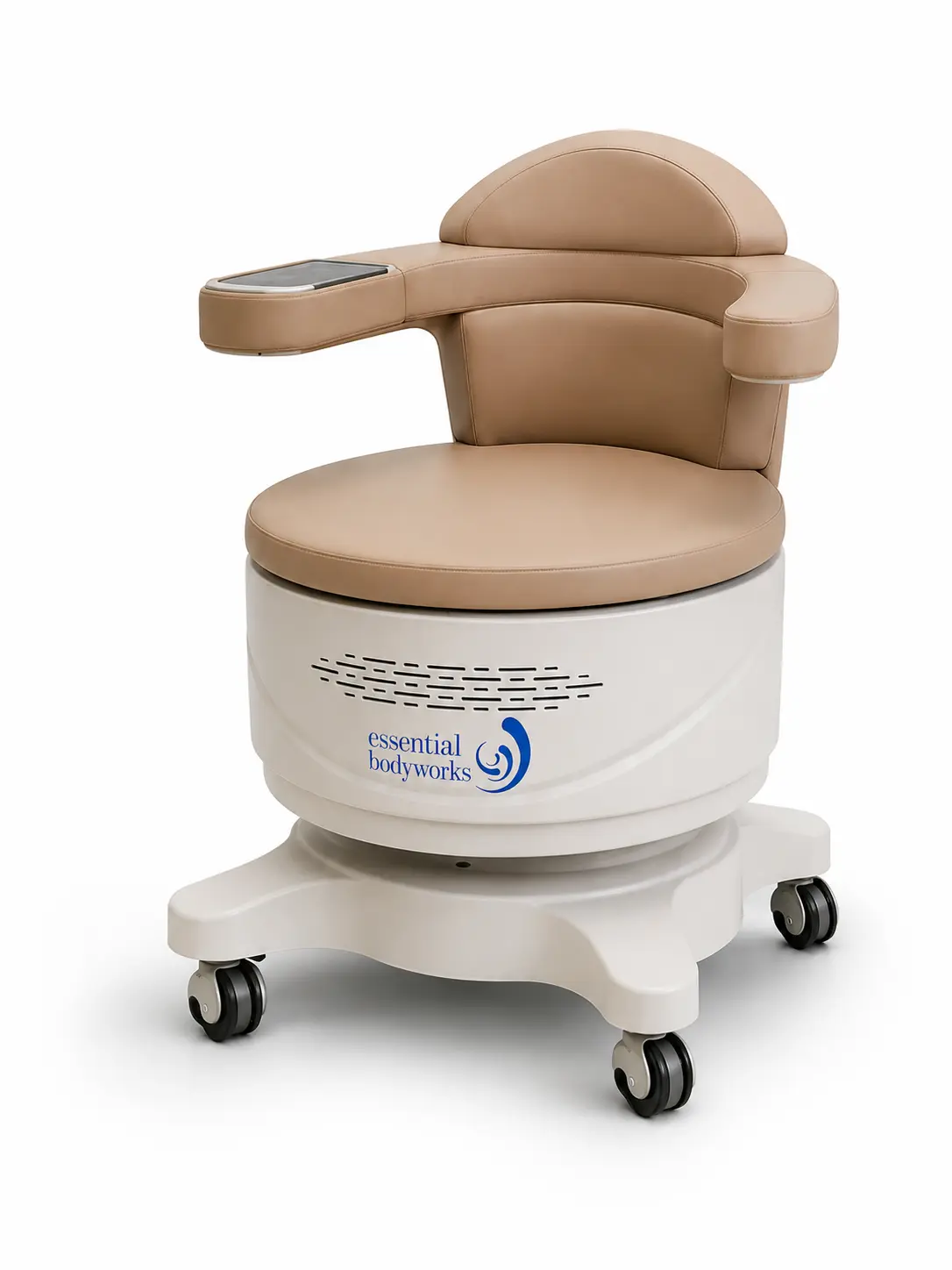
For appropriately screened men with a relevant pelvic-floor presentation, the Essential Bodyworks pelvic health chair offers an additional non-invasive, fully clothed way to stimulate the pelvic-floor muscles. It may be worth exploring where urinary leakage or difficulty activating the pelvic floor is part of the picture, including for some men later in recovery after prostate surgery.
Research into extracorporeal magnetic pelvic-floor stimulation in men is developing, with small studies reporting encouraging improvements in continence and symptoms, particularly in men recovering after prostate surgery. The studies use different protocols and include relatively small numbers, so individual response remains important. At Essential Bodyworks, the chair is therefore offered as a positive option worth exploring for suitable, screened clients rather than with a promise of a particular outcome.
The chair can therefore be presented positively as a genuine additional option while keeping expectations realistic. It is designed to stimulate the pelvic-floor muscles, not to treat the prostate or prostate cancer. For men recovering after surgery or other treatment, timing and suitability are individual and are considered through Essential Bodyworks screening, current recovery and any guidance the client has already been given.
Can the Pelvic Health Chair help with prostate problems?
The Pelvic Health Chair does not treat prostate enlargement, prostatitis or prostate cancer.
However, some men experience pelvic-floor weakness or urinary-control difficulties, including following prostate surgery. Where appropriate, pelvic-floor rehabilitation may help support these concerns.
We review your health history and completed pre-screen form before your appointment to determine whether chair treatment may be suitable. Following prostate surgery, appropriate medical clearance is required.
If you have new or unexplained urinary symptoms, your GP should assess these before you begin pelvic-floor treatment.
Staying within the right support pathway
Essential Bodyworks provides pelvic-floor and wellbeing support rather than diagnosis of prostate, bladder or other medical conditions. Our role is to understand the pelvic-health symptoms and goals you bring to us, screen appropriately and explain which of our support options may be relevant. If something falls outside our scope, we will simply explain that and signpost appropriately.
Where you are already receiving medical care, pelvic-health support can sit alongside it. Urgent or clearly concerning symptoms - such as being unable to pass urine, significant unexplained bleeding or becoming acutely unwell - should not be managed through a wellbeing service alone.
Explore Men’s Pelvic Health
Understanding the Male Pelvic Floor
- Pelvic-Floor Recovery Before & After Prostate Surgery
Urinary Leakage in Men
Urgency, Frequency & Nocturia
Post-Void Dribble
Pelvic-Floor Exercises for Men
Pelvic-Floor Relaxation & Male Pelvic Pain
Sexual Function & Pelvic Health
- Constipation, Bowel Health & Your Pelvic Floor
- Keeping Your Pelvic Floor Healthy for Life
Pelvic Health Chair Treatment
Non-invasive, fully clothed pelvic-floor support for suitable, screened clients.
This page provides general pelvic-health and wellbeing education. Essential Bodyworks focuses on supportive pelvic-floor, bladder, bowel and recovery strategies and does not diagnose prostate or other medical conditions. Where something is outside our scope, we will signpost appropriately. Individual suitability applies to all treatments and services.
pelvic health. whole body care. lasting confidence.
© Essential Bodyworks. All rights reserved.