Perimenopause and menopause are natural life stages, and every woman's experience is different. Hormonal changes can influence the vulva, vagina, bladder, urethra and pelvic floor, while strength, movement, bowel health, stress, sleep and wider wellbeing can also shape how you feel.
This is not about treating the menopausal body as something that has gone wrong. Understanding the changes you notice can help you choose the combination of pelvic-floor support, self-care and wider wellbeing approaches that feels right for you.
In this resource
- First, where is your pelvic floor?
- How menopause can affect pelvic and urinary tissues
- Leakage when you cough, sneeze, laugh or exercise
- Urgency, frequency and getting up at night
- Vaginal and vulval dryness, irritation and discomfort
- Prolapse, heaviness and pressure
- Strength and relaxation both matter
- Breathing, pressure and the pelvic floor
- Nutrition, hydration and bowel health
- A natural, whole-body approach to hormonal wellbeing
- Herbal Medicine as a menopause wellbeing choice
- Staying strong and active for the years ahead
- Could the pelvic health chair be part of your support plan?
- Staying within the right support pathway
- Explore this section
First, where is your pelvic floor?
The pelvic floor is a layered group of muscles and connective tissues forming a supportive base at the bottom of the pelvis. It helps support the bladder, bowel and pelvic organs and contributes to bladder and bowel control, sexual function and the way pressure is managed when you cough, lift, exercise or move.
A healthy pelvic floor needs both strength and the ability to relax. Pelvic-floor problems are therefore not always simply a matter of weak muscles.
How menopause can affect pelvic and urinary tissues
Falling oestrogen levels around and after menopause can affect tissues in and around the vulva, vagina, bladder and urethra. Some people experience dryness, irritation, soreness or discomfort during sex, while others notice urinary symptoms such as urgency, frequency, discomfort when passing urine or recurrent urinary tract infections.
These changes are often grouped under the term genitourinary symptoms of menopause (GSM). Pelvic-floor support can sit alongside strategies for vaginal and vulval comfort, but dryness and tissue changes are not simply signs of a weak pelvic floor.
Leakage when you cough, sneeze, laugh or exercise
Leakage with coughing, sneezing, laughing, lifting or exercise is often described as stress urinary incontinence. Pelvic-floor training can help many women build strength, timing and confidence, and our dedicated leakage resource explains the wider support pathway.
Good pelvic-floor work includes both contraction and relaxation and should feel purposeful rather than like endless squeezing. Where leakage, reduced activation or weakness is part of the picture, Essential Bodyworks can also help you explore whether the pelvic health chair may be a suitable additional option.
Urgency, frequency and getting up at night
Urgency, frequency and getting up at night can be influenced by several things, including bladder habits, fluid and caffeine patterns, bowel health and menopausal tissue changes. Our dedicated Hub resources explore practical bladder strategies and help you recognise where pelvic-floor support may fit.
The aim is to understand your own pattern rather than assume that every bladder change means weakness or that you simply need to drink less.
Vaginal and vulval dryness, irritation and discomfort
Dryness, soreness, irritation and discomfort during intimacy can occur around menopause. Moisturisers and lubricants are useful non-hormonal options for some women. Local vaginal oestrogen is also an established prescribed option for GSM and has a strong evidence base; low-dose local treatment generally produces much lower systemic exposure than systemic hormone therapy.
Some women choose prescribed hormonal treatment and others prefer non-hormonal or natural wellbeing approaches. This Hub is choice-led rather than promoting one menopause pathway. Essential Bodyworks does not prescribe vaginal oestrogen, but it can be useful to know that local treatment exists if you want to discuss it with an appropriate prescriber.
Prolapse, heaviness and pressure
Heaviness, dragging, pressure or a bulge can sometimes be associated with pelvic organ prolapse. Pelvic-floor function, bowel habits, pressure management and strength can all form part of a supportive approach.
Do not assume that heaviness means you simply need to squeeze harder. The pelvic floor needs to respond, strengthen and relax appropriately. Our dedicated prolapse resource will explore practical support in more detail.
Strength and relaxation both matter
Pelvic-floor training can improve strength, endurance, timing and control, but healthy function also includes being able to let the muscles soften and relax. More tension is not automatically better.
That distinction matters if you experience discomfort, difficulty relaxing or a feeling of constantly gripping. The aim is adaptable pelvic-floor function - muscles that can respond when needed and release when they do not.
Breathing, pressure and the pelvic floor
The pelvic floor does not work in isolation. Your diaphragm, abdominal wall and pelvic floor coordinate as you breathe and move. Learning to breathe through effort rather than repeatedly holding your breath can be a useful part of pressure management during lifting, exercise and everyday activity.
Nutrition, hydration and bowel health
Bowel health matters to pelvic health. Constipation and repeated straining can add pressure through the pelvic floor. A balanced diet and appropriate fluid intake can support stool consistency, while some bladder symptoms may also benefit from reviewing caffeine and whether fluid intake is too high or too low.
A natural, whole-body approach to hormonal wellbeing
Hormonal changes are a natural part of life, and everyone's experience is different.
At Essential Bodyworks, we believe in supporting the whole person through nourishing food, restorative sleep, movement, stress management and individualised care.
Herbal Medicine can also form part of a personalised approach to wellbeing, drawing on traditional plant knowledge alongside an understanding of each person's health history, needs and circumstances.
Our aim is to help you explore your options, feel informed and find the support that feels right for you.
Herbal Medicine as a menopause wellbeing choice
For women who prefer a natural or complementary approach, Herbal Medicine can be a genuine part of their menopause wellbeing choices. At Essential Bodyworks, herbal support is individual rather than based on a one-size-fits-all product list, allowing the consultation to consider the woman's symptoms, wider wellbeing, current medication and personal preferences.
Staying strong and active for the years ahead
Pelvic health is part of whole-body health. Maintaining regular movement and gradually building strength can support confidence and function through midlife and later life. Pelvic-floor training can also be continued throughout life.
If exercise causes leakage, pressure, pain or other pelvic symptoms, that does not automatically mean you must stop being active. Appropriate assessment and modification can help you find a way forward.
Could the pelvic health chair be part of your support plan?
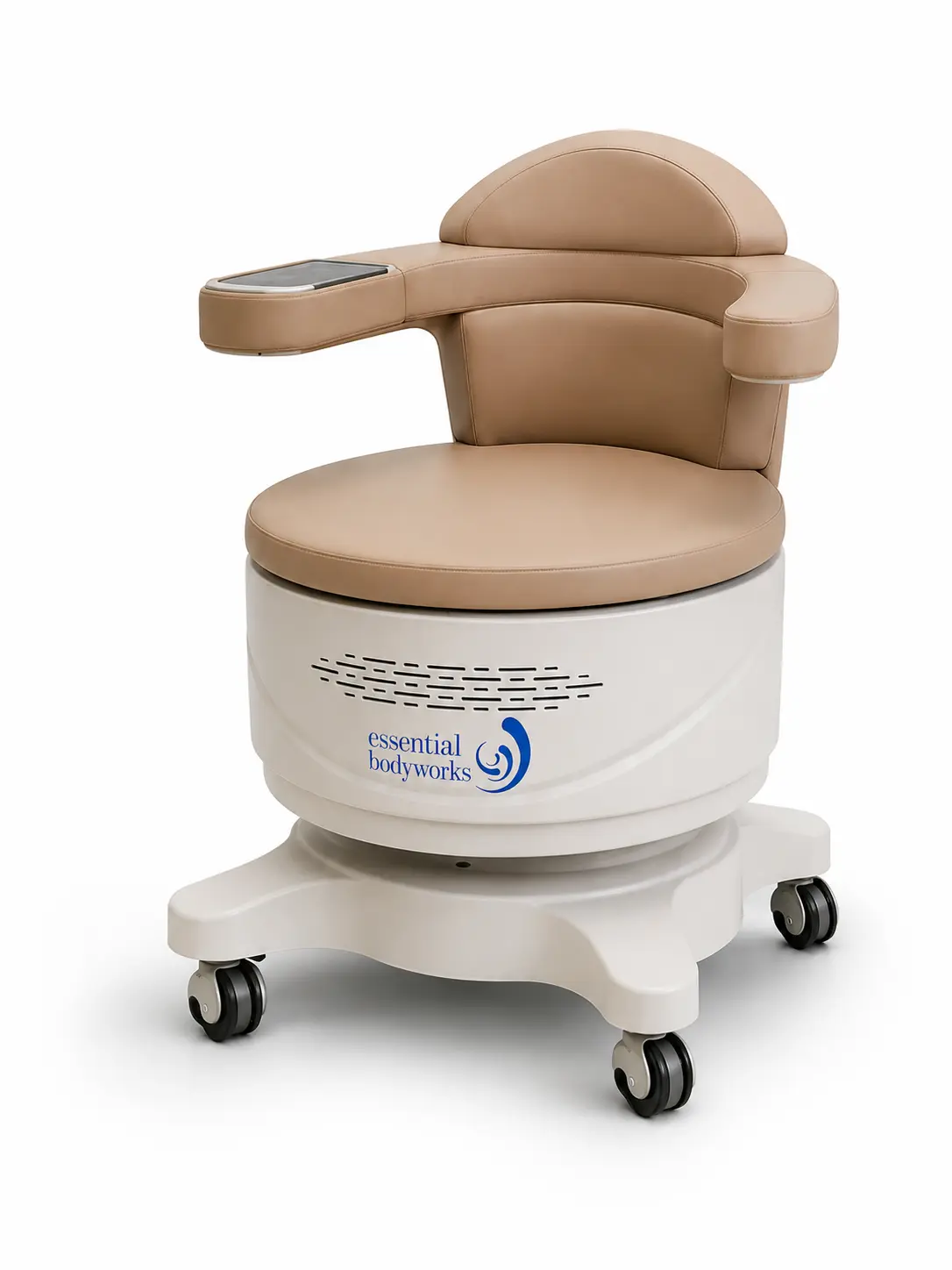
For appropriately screened women, the Essential Bodyworks pelvic health chair offers a non-invasive, fully clothed way to stimulate the pelvic-floor muscles. It can be a particularly relevant option to explore where stress leakage, pelvic-floor weakness or difficulty activating the muscles is part of the menopause or midlife picture.
Research into chair-based magnetic pelvic-floor stimulation is developing and increasingly encouraging. Recent systematic reviews in women with urinary incontinence report improvements in symptoms and quality of life, while also noting variation between devices, protocols and study quality. This supports presenting the chair positively as a genuine pelvic-floor option without promising a particular result.
The chair can sit alongside active pelvic-floor work, movement, breathing and other Essential Bodyworks wellbeing support. It is designed to stimulate the pelvic-floor muscles; it is not a treatment for menopause itself, vaginal dryness/GSM or urinary infection. Suitability and individual goals are considered through Essential Bodyworks screening.
Staying within the right support pathway
Essential Bodyworks focuses on pelvic-floor and whole-person wellbeing support through menopause and beyond. Our role is to help you understand the symptoms and goals you bring to us, screen appropriately and explain which of our support options may be relevant. If something falls outside our scope, we will explain that and signpost appropriately.
Where you are already receiving medical or menopause care, Essential Bodyworks support can sit alongside it. Urgent or clearly concerning changes - such as significant unexplained bleeding, being unable to pass urine or becoming acutely unwell - should not be managed through a wellbeing service alone.
Explore this section
Menopause & Your Pelvic Floor
- Why Do I Leak When I Cough or Sneeze?
- Urinary Urgency & Frequency
- Why Am I Getting Up at Night to Urinate?
- Pelvic-Floor Weakness: What Does It Really Mean?
- Pelvic-Floor Relaxation & Overactivity
- Prolapse, Heaviness & Pelvic Pressure
Vaginal & Vulval Changes Around Menopause
Recurrent UTIs & Menopause
- Sexual Comfort & Pelvic Health
- Bowel Health & Constipation
- Keeping Your Pelvic Floor Healthy for Life
Pelvic Health Chair Treatment
Non-invasive, fully clothed pelvic-floor support for suitable, screened clients.
This page provides general menopause, pelvic-health and wellbeing education. Essential Bodyworks focuses on pelvic-floor support, bladder and bowel wellbeing, breathing, Nutrition, Herbal Medicine and appropriately screened pelvic health chair treatment. Menopause choices are individual; where something falls outside our scope, we will signpost appropriately.
pelvic health. whole body care. lasting confidence.
© Essential Bodyworks. All rights reserved.