During pregnancy, your abdominal wall stretches and adapts to make room for your growing baby. The two long rectus abdominis muscles at the front of the abdomen move further apart as the connective tissue between them - the linea alba - widens. This is commonly called diastasis recti, abdominal separation or divarication. It is an adaptation to pregnancy, not evidence that your body is broken.
Seeing or feeling a gap after birth can be worrying, but early postnatal separation is common. Recovery is not simply about making a gap disappear. Your ability to breathe, move, manage pressure, develop abdominal strength, coordinate with your pelvic floor and return comfortably to everyday activity are all important parts of the picture.
In this resource
- Understanding your abdominal recovery
- A gap is only part of the story
- What about abdominal doming?
- Your core is more than your abdominal muscles
- Breathing can be a useful place to begin
- Building strength and confidence
- Can I return to abdominal exercises and lifting?
- Everyday pressure matters too
- How Essential Bodyworks can support you
- Staying within the right support pathway
- The message to take away
- Continue your recovery
Understanding your abdominal recovery
During pregnancy, your abdominal wall adapts to make space for your growing baby. The connective tissue joining the two sides of your abdominal muscles stretches, allowing the muscles to move further apart. This is a normal part of pregnancy, not automatically a sign of damage.
After birth, your abdominal wall continues to adapt and recover. Everyone's experience is different, and recovery is about much more than the width of the gap between your abdominal muscles.
A gap is only part of the story
It can be tempting to judge recovery by how many fingers fit between the abdominal muscles. Gap width can be useful information in an assessment, but it does not tell the whole story.
Core recovery is also about how well the abdominal wall can create and manage tension, how comfortably you can move and breathe, whether the abdomen bulges or domes during effort, how the pelvic floor responds, and whether symptoms such as pain, heaviness or leakage are present.
The aim of this Hub is not to encourage repeated measuring or make you feel that your abdomen needs to look a particular way. We want to help you understand function, build confidence and recognise the support options that may help you progress.
What about abdominal doming?
You may notice your abdomen forming a ridge or dome along the middle during certain movements.
This does not automatically mean you have damaged your abdominal muscles. It can be useful feedback about how your abdominal wall is responding to an activity.
If a movement causes pronounced doming, discomfort or a feeling that you cannot comfortably manage the effort, you may benefit from adjusting the movement, changing your breathing, reducing the difficulty or seeking individual guidance.
Your core is more than your abdominal muscles
Core function involves a coordinated system rather than one muscle working in isolation. Your diaphragm, abdominal wall, pelvic floor and surrounding muscles respond together as you breathe, move, lift and manage pressure.
This is why postnatal core recovery fits naturally alongside pelvic health. Simply pulling your stomach in harder or repeatedly performing abdominal exercises is not the whole answer.
Breathing can be a useful place to begin
Gentle breathing awareness can help you reconnect with the abdominal wall and pelvic floor. In a comfortable position, allow the ribs and abdomen to expand naturally as you breathe in. As you breathe out, you can explore a gentle abdominal and pelvic-floor response without forcing or holding your breath.
The goal is not a maximum contraction. It is to begin restoring awareness and coordination that can later be carried into everyday movements such as rolling, standing, lifting your baby, pushing a pram and returning to exercise.
Building strength and confidence
The goal is not simply to close a gap. It is to help your abdominal muscles work together effectively, rebuild strength and coordination, and support you in returning to the activities you enjoy.
Gentle movement, comfortable breathing and gradually increasing the demands on your abdominal muscles can all play a part.
There is no single exercise programme that suits everyone. What matters is finding an approach that works with your stage of recovery, your current ability and your personal goals.
Can I return to abdominal exercises and lifting?
Having diastasis recti does not mean you must permanently avoid abdominal exercises, lifting or activities you enjoy.
As your strength and confidence develop, you can gradually explore more challenging movements at a level that feels appropriate for you.
If you experience persistent pain, significant abdominal bulging, pelvic heaviness or bladder or bowel-control concerns, an assessment with a pelvic-health physiotherapist may help you understand what additional support would be useful.
Everyday pressure matters too
Core recovery happens outside exercise sessions as well. Repeated straining with constipation, holding your breath during lifting, or repeatedly choosing tasks that are currently too demanding can all increase pressure through the abdominal wall and pelvic floor.
Simple strategies can help: breathe through effort, keep loads close to your body, use your legs when lifting, roll onto your side to get out of bed in the early stages, and address constipation rather than repeatedly straining. If bowel emptying is difficult, a low footstool can help by bringing the knees above the hips; leaning slightly forwards can also support a more comfortable toileting position.
How Essential Bodyworks can support you
At Essential Bodyworks, we recognise that abdominal recovery is part of your wider postnatal wellbeing.
Our Pelvic Health Hub provides education about breathing, pelvic-floor awareness, movement, nutrition and the relationship between your abdominal wall and pelvic floor.
Where a separate pelvic-floor weakness or reduced activation concern is identified, Pelvic Health Chair Treatment may be considered following individual screening. The chair does not directly treat or close diastasis recti.
Staying within the right support pathway
Essential Bodyworks focuses on postnatal wellbeing, pelvic-floor support and helping you reconnect with movement and function. If something falls outside our scope, we will explain that and signpost appropriately.
Where you are already receiving postnatal, medical or specialist care, Essential Bodyworks support can sit alongside it. Individual assessment elsewhere may be useful where pain, significant functional difficulty or other symptoms need more specific investigation.
The message to take away
Your postnatal abdomen does not need to be treated as broken. It has adapted through pregnancy and birth and can continue to build strength, control and confidence through progressive, individual recovery.
Focus on comfortable breathing, good coordination, gradual strength, everyday function and the things you want your body to be able to do. Recovery does not have to be measured by a perfect-looking abdomen or a particular gap width; confidence, strength and comfortable function matter.
Continue your recovery
Breathing & Pressure Management
Pelvic-Floor Exercises After Birth
Returning to Exercise After Birth
Leakage After Pregnancy & Birth
- Prolapse, Heaviness & Pressure
Caesarean & Pelvic-Floor Recovery
Bladder & Bowel Health After Birth
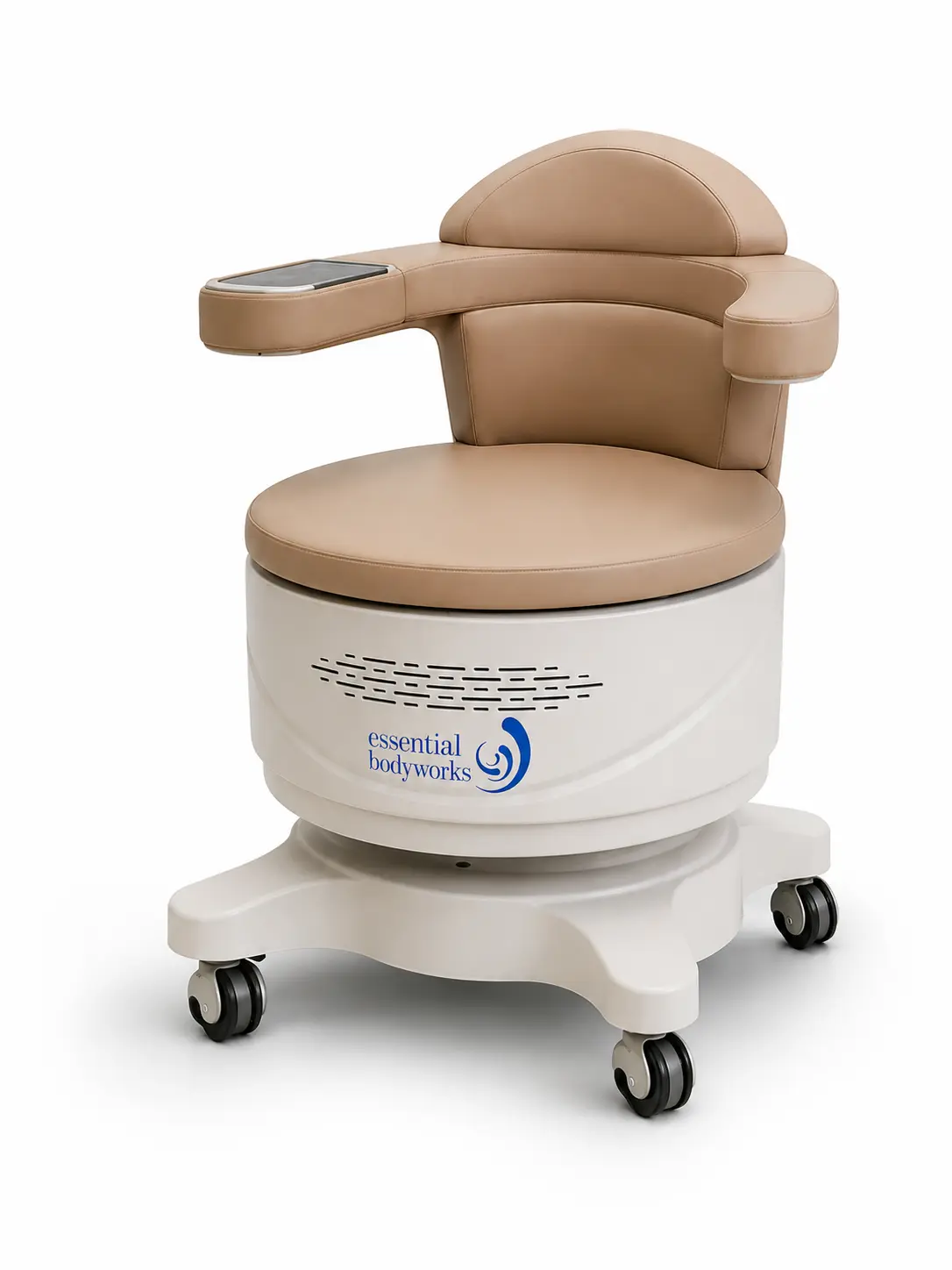
Pelvic Health Chair Treatment
Chair treatment is relevant only where a separate pelvic-floor indication is identified; it is not a treatment for diastasis itself.
This page provides general postnatal, core and pelvic-health education. Essential Bodyworks focuses on supportive breathing, movement, bowel wellbeing and appropriately screened pelvic-floor options. Diastasis and pelvic-floor recovery vary between individuals; where something falls outside our scope, we will signpost appropriately.
© Essential Bodyworks. All rights reserved.