
Pelvic Health & Wellbeing
Personalised Pelvic Health Care for Women and Men
Pelvic health concerns are common and can affect people at different stages of life. They may influence bladder control, confidence, everyday activities, exercise, sleep and general wellbeing.
Our Pelvic Health Hub is a growing source of clear, supportive information to help you understand pelvic health concerns and explore the support available at Essential Bodyworks.
Find your starting point
Choose Your Pathway
Our Pelvic Health Hub is a growing source of clear, supportive information to help you understand pelvic health concerns and explore the support available at Essential Bodyworks.
Featured pathway
Pregnancy & Postnatal
Pregnancy, birth and postnatal recovery bring natural changes and adaptations. Explore supportive information about pelvic-floor function, breathing, movement, bladder and bowel wellbeing, preparing for birth and looking after yourself afterwards.
Explore pathwayPerimenopause, Menopause & Beyond
Pelvic health can change through perimenopause, menopause and later life. Explore choice-led information and support for every stage.
Men's Pelvic Health
The male pelvic floor plays an important role in bladder and bowel control, sexual function and everyday confidence.
Bladder & Bowel Health
Leakage, urgency, frequency, waking at night and bowel habits — understand what may be happening and the support available.
Understanding Your Pelvic Floor
How the pelvic floor works, how to find and exercise it, and why strength and relaxation both matter.
Pelvic Health Support & Treatment
Consultation and pre-screening, non-invasive pelvic health chair treatment and whole-body Essential Bodyworks support.
Recognising what you feel
Could Pelvic Health Be Affecting You?
Pelvic health support may be worth exploring if you:
- Worry about bladder leaks when you cough, laugh or exercise
- Experience urgency or frequency, or find yourself planning your day around toilets
- Wake during the night needing to pass urine
- Notice changes in your urine flow or difficulty starting or maintaining your flow
- Experience pelvic floor weakness, pressure or reduced confidence
- Struggle with core strength or stability
- Feel that pregnancy or childbirth has changed your body
- Notice pelvic health changes during or after menopause
- Have concerns about your prostate, or changes following prostate treatment or surgery
- Avoid activities you once enjoyed because you are worried about your symptoms
If any of these sound familiar, you are not alone.
Pelvic health concerns are common — and support is available.
From the resource library
Featured Resources
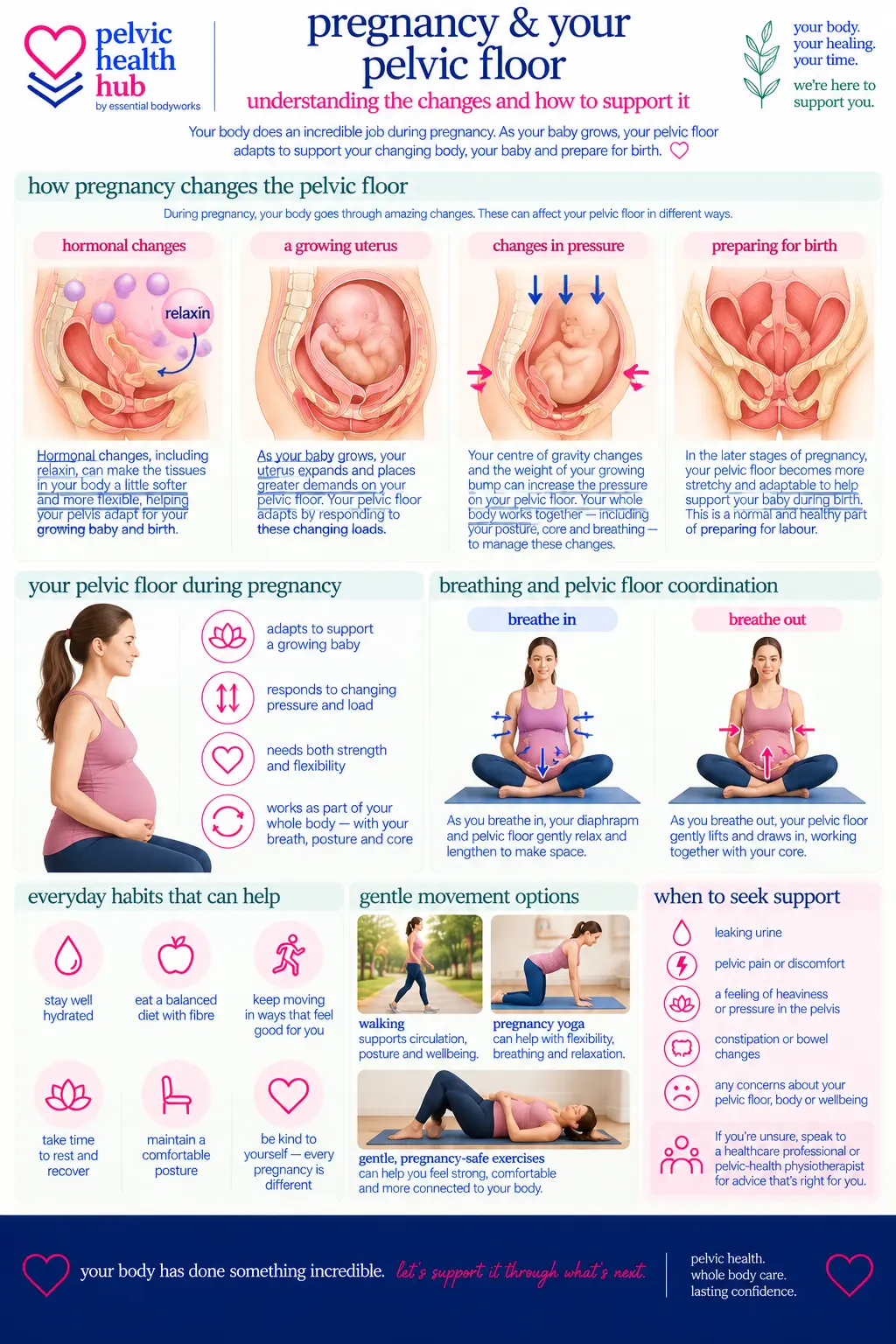
Pelvic Health During Pregnancy
Pregnancy brings remarkable changes to your body, and your pelvic floor is part of that journey.
Read the resource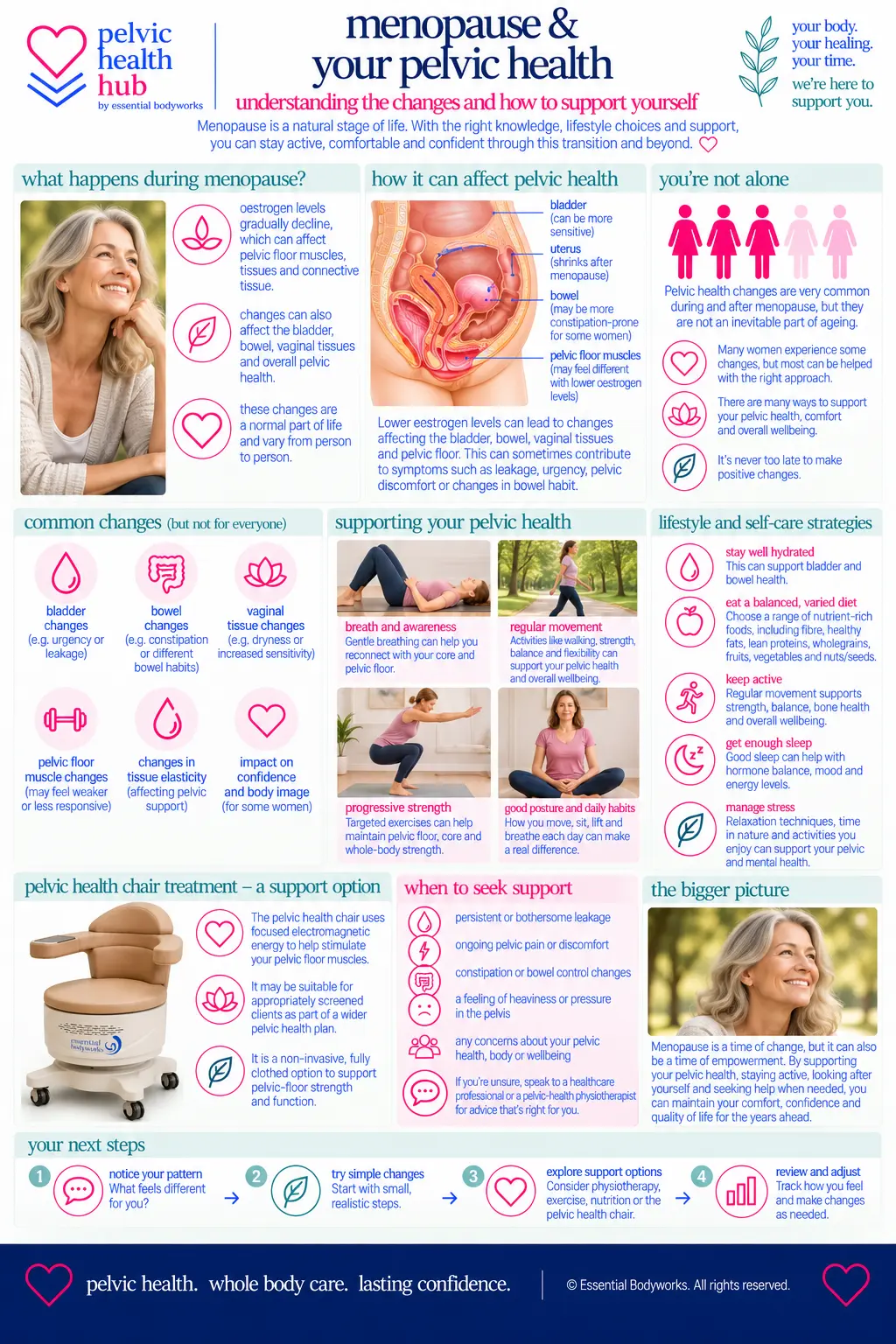
Pelvic Health Through Perimenopause, Menopause & Beyond
Pelvic health can change through perimenopause, menopause and later life, but change does not mean decline. Explore bladder confidence, pelvic-floor strength and relaxation, vaginal and vulval comfort, bowel health, sexual wellbeing and the supportive choices available through Essential Bodyworks for the years ahead.
Read the resource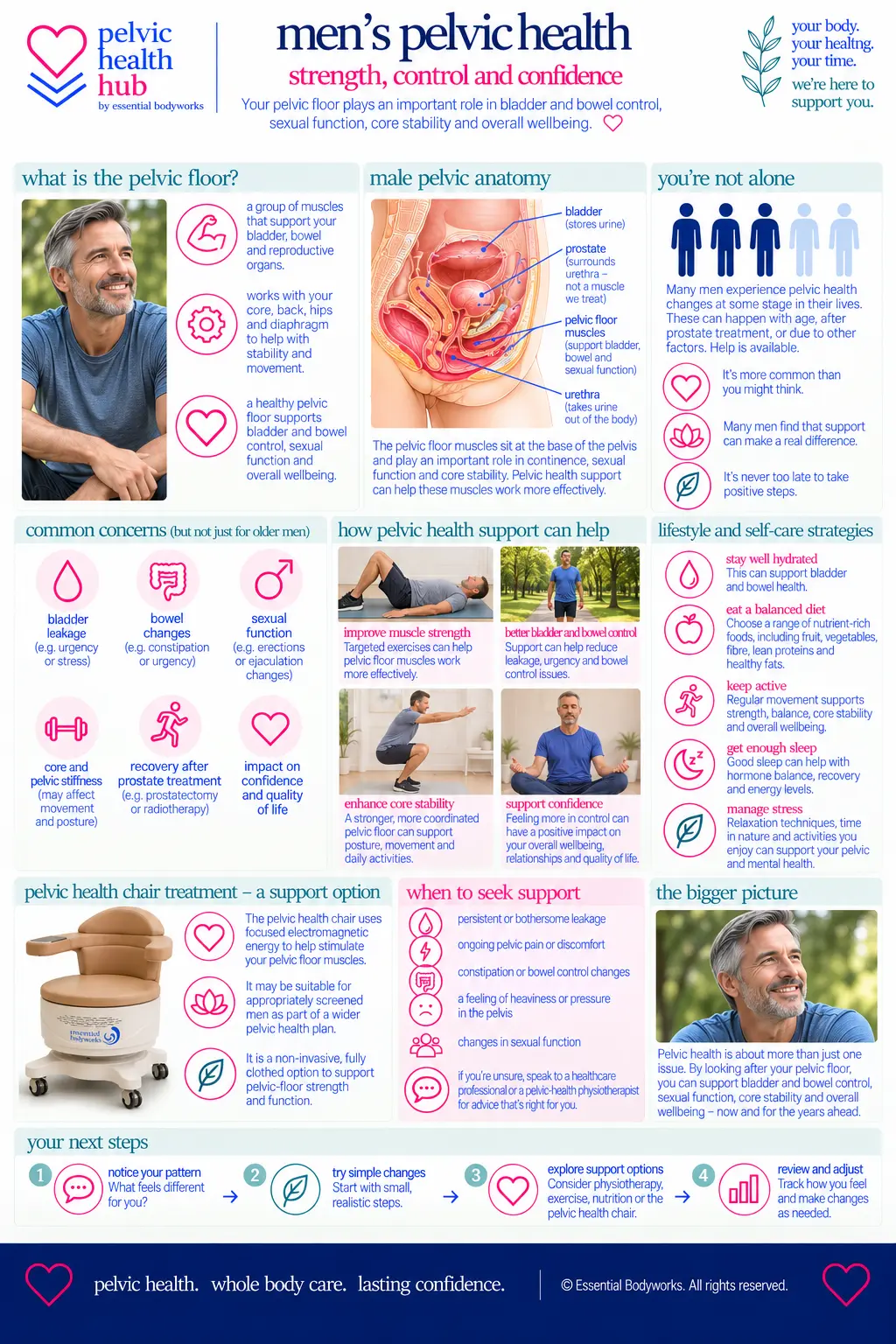
Men’s Pelvic Health
The male pelvic floor plays an important role in bladder and bowel control, sexual function and everyday movement. Explore pelvic-floor awareness, urinary confidence, prostate-related recovery, bowel wellbeing, strength and relaxation, and the support options available through Essential Bodyworks.
Read the resource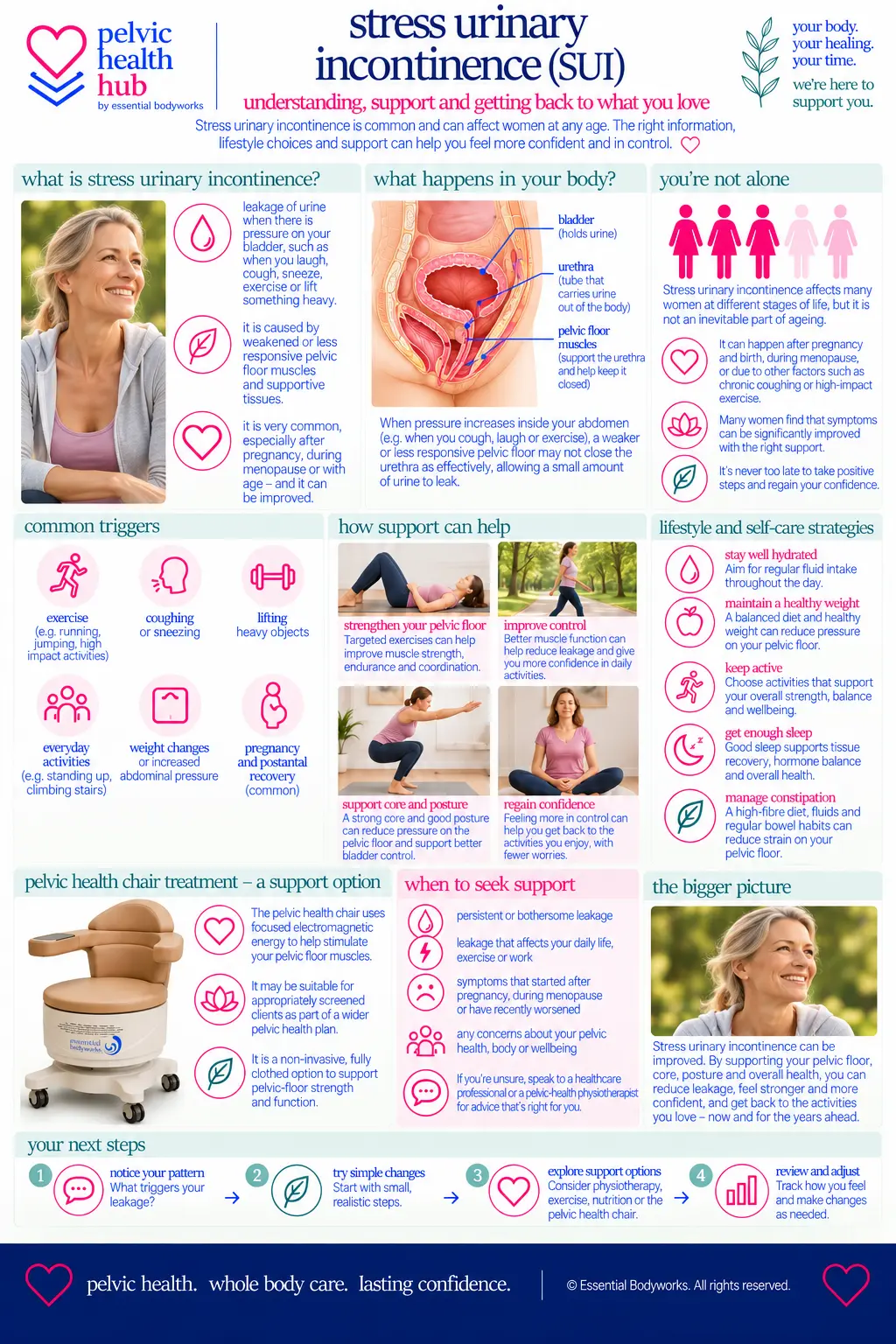
Why Do I Leak When I Cough or Sneeze?
Leakage with coughing, sneezing, laughing, lifting or exercise is often called stress urinary incontinence. Understand what is happening, discover practical ways to support your pelvic floor and explore the support options available through Essential Bodyworks.
Read the resource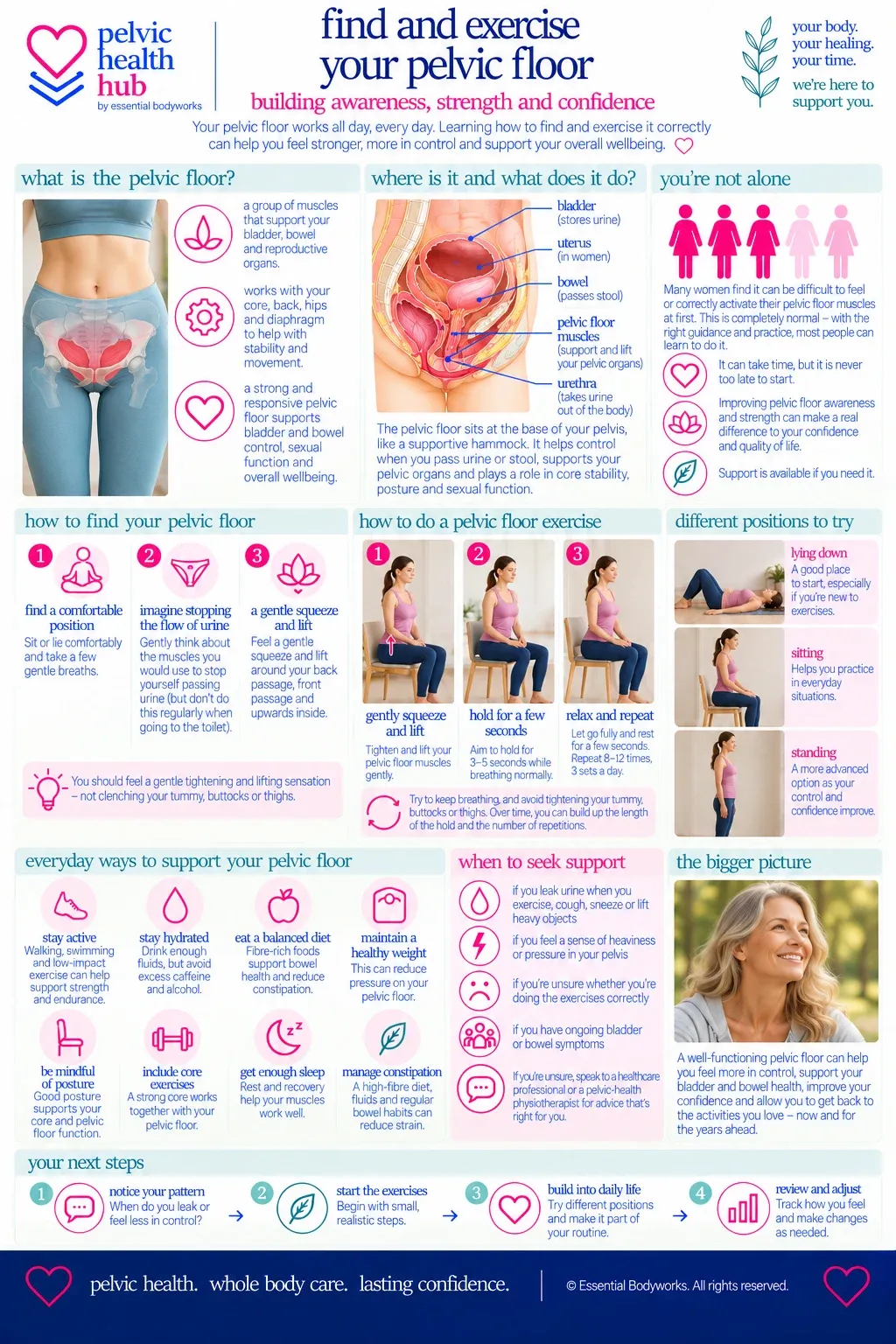
How Do I Find & Exercise My Pelvic Floor?
Not sure whether you are exercising the right muscles? Learn where your pelvic floor sits, how a gentle contraction and full release can feel, how breathing and movement fit together, and why a healthy pelvic floor needs both strength and relaxation.
Read the resource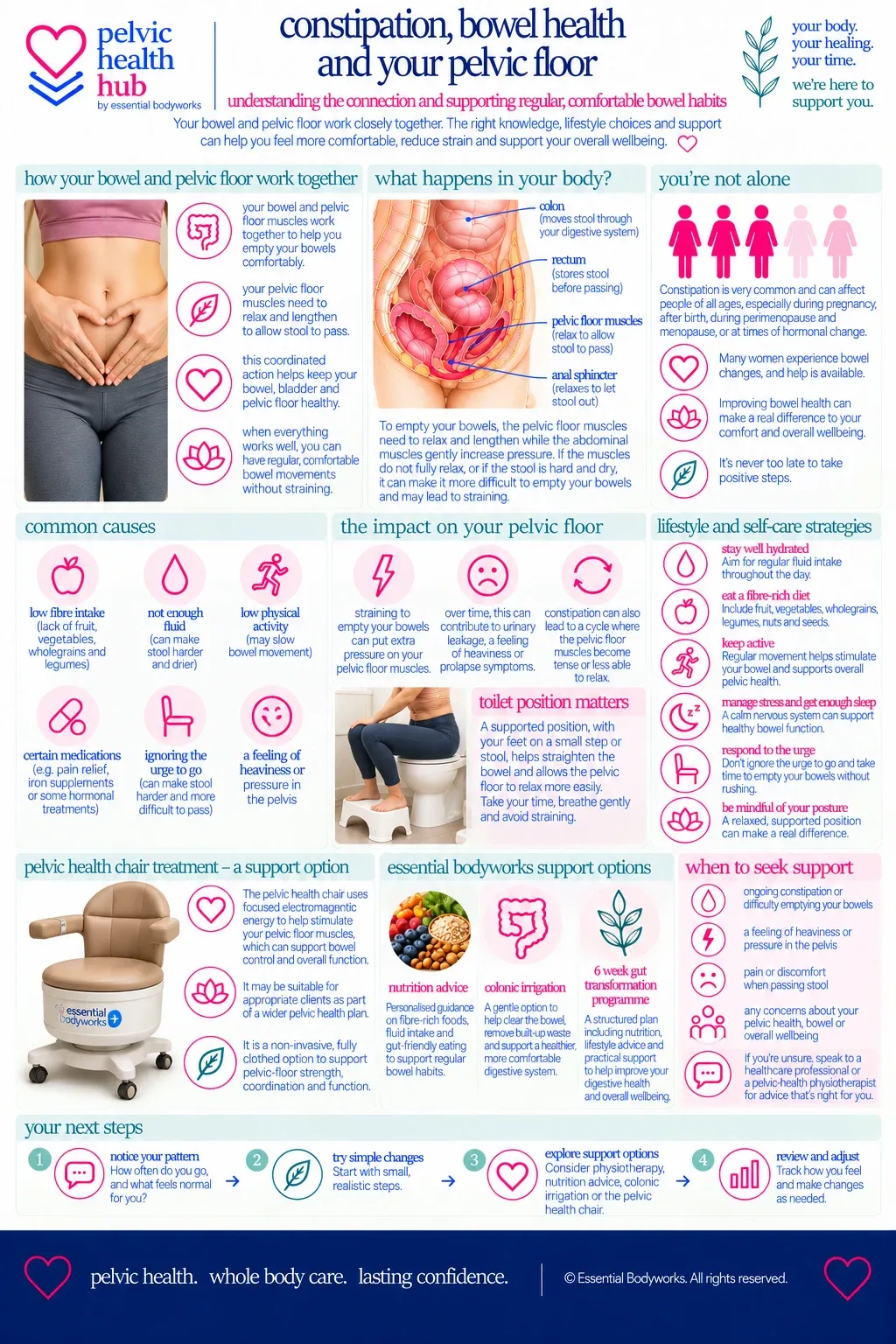
Constipation, Bowel Health & Your Pelvic Floor
Constipation is about more than how often you go. Hard stools, straining, incomplete emptying and difficulty relaxing can all affect comfort and the pelvic floor. Learn practical ways to support easier bowel habits and explore the Essential Bodyworks options that may fit your wider digestive wellbeing.
Read the resourceComplete resource library
All 17 Pelvic Health Resources
Browse every published resource, or use the pathways above for a guided starting point.
- Pelvic Health During Pregnancy
- Postnatal Pelvic Health & Recovery
- Diastasis Recti & Core Recovery
- Pelvic Health Through Perimenopause, Menopause & Beyond
- Men’s Pelvic Health
- Why Do I Leak When I Cough or Sneeze?
- Urinary Urgency & Frequency
- Why Am I Getting Up at Night to Urinate?
- How Do I Find & Exercise My Pelvic Floor?
- Pelvic-Floor Weakness: What Does It Really Mean?
- Pelvic-Floor Overactivity & Relaxation
- Constipation, Bowel Health & Your Pelvic Floor
- Prolapse, Heaviness & Pelvic Pressure
- Pelvic Pain: When Should I Seek Help?
- Pelvic Health & Sexual Wellbeing
- Pelvic-Floor Recovery Before & After Prostate Surgery
- Keeping Your Pelvic Floor Healthy for Life
Looking for the separate practical guide? View Nutrition for Your Pelvic Health.
Treatment and guidance
Personalised Pelvic Health Support
Every person's needs, symptoms and health history are different. Before treatment, you will complete a detailed health questionnaire so we can pre-screen your suitability. Your appointment includes a private consultation to review your information, discuss any changes and answer your questions.
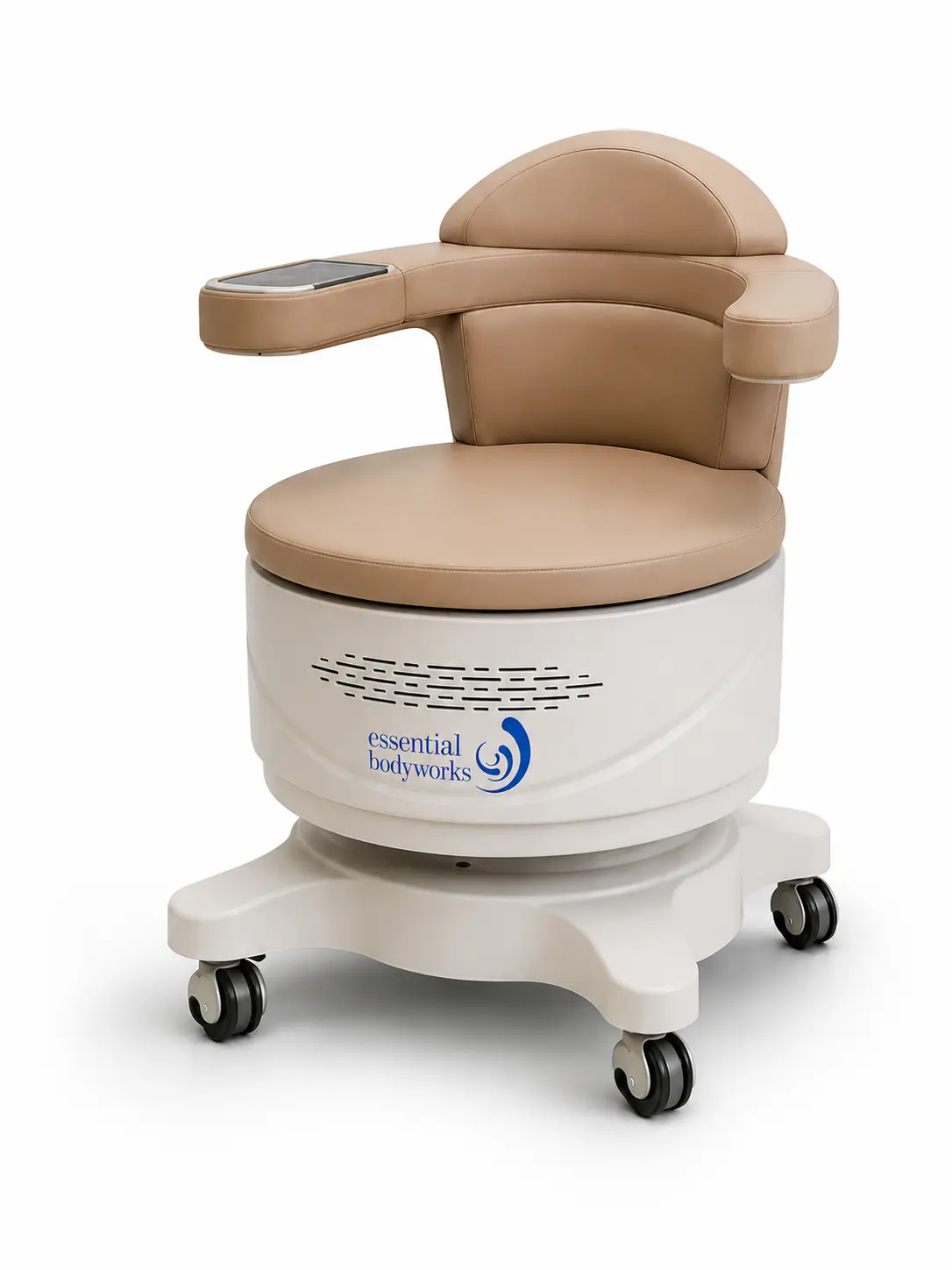
Where appropriate, our non-invasive pelvic health chair provides comfortable, fully clothed treatment designed to stimulate the pelvic floor muscles. Your recommended programme will be based on your individual needs and goals.
Individual experiences and results vary. Treatment suitability is assessed before commencing a programme.
- Supports pelvic floor strength
- Supports bladder control
- Supports pelvic-floor muscle activation and function
- Comfortable, non-invasive and fully clothed
- May support confidence during everyday activities and exercise
- May be suitable for some clients during postnatal recovery, around menopause or following prostate surgery, subject to individual screening.
Connected care
Whole-Body Essential Bodyworks Support
Pelvic health sits within the whole body. Where genuinely relevant, these services can sit alongside your pelvic-health support.
Nutrition
Bowel regularity, hydration and whole-body nourishment.
Breathwork & Sound Therapy
Relaxation, body awareness and breathing/pressure coordination.
Herbal Medicine
A choice-led pathway in menopause and general wellbeing.
Colonic Hydrotherapy
Constipation and bloating support for appropriate clients.
6 Week Gut Transformation
Structured digestive-health support where bowel symptoms make it relevant.
Pregnancy Treatments
Supportive treatments alongside antenatal pelvic health.
Manual Lymphatic Drainage
Postnatal and post-operative swelling and supportive recovery.
A practical guide
Nutrition for Your Pelvic Health
Select the guide to enlarge it, or download a copy.
Download the Nutrition Guide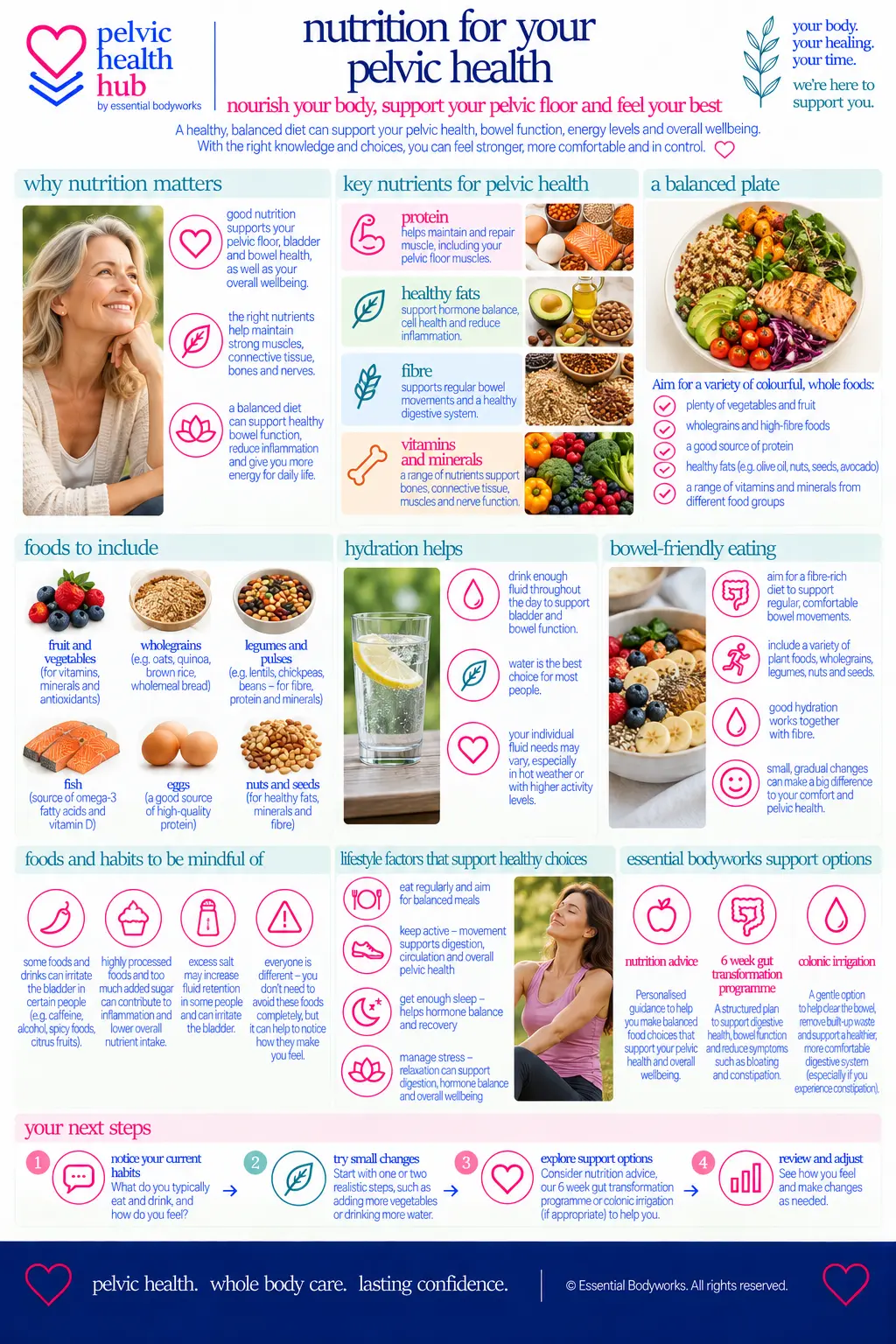
Pelvic Health Chair Treatment FAQs
Clear answers about pelvic health, suitability, consultations and non-invasive pelvic health chair treatment for women and men.
What is pelvic health chair treatment?
Pelvic health chair treatment is a non-invasive pelvic-floor stimulation option used while you remain seated and fully clothed. It is used as part of a personalised pelvic health plan.
Who may benefit from pelvic health support?
Pelvic health support may be worth exploring if you experience bladder leaks, urgency or frequency, pelvic floor weakness or pressure, reduced core stability, changes following pregnancy and childbirth, changes during or after menopause, or male pelvic health concerns including changes following prostate treatment or surgery.
How does the treatment work?
Non-invasive pelvic-floor stimulation produces repeated muscle contractions during each appointment. This is designed to work the muscles that can be difficult to activate through exercise alone.
Is the treatment comfortable?
Most people describe it as a strong but comfortable muscle working sensation. There are no needles, no surgery and no internal examinations.
Do I remain fully clothed?
Yes. You remain fully clothed and seated throughout your appointment.
How long is each appointment?
Treatment time is approximately 45 minutes. Your first appointment is longer, as it includes a private consultation to review your health questionnaire.
How many sessions might I need?
Your treatment plan will depend on your individual symptoms, goals and response. We will discuss a suitable approach during your consultation and review progress throughout your programme. Results vary.
When might I notice a change?
Everyone is different. Some people notice a change early on, while others notice more as they progress through a course. Individual experiences and results vary.
Can I return to normal activities afterwards?
Yes. There is no recovery time needed, so you can continue with your normal activities straight afterwards.
What happens before my first appointment?
You will complete a detailed health questionnaire so we can pre-screen your suitability. Your appointment then includes a private consultation to review your information, discuss any changes and answer your questions.
Who may not be suitable for treatment?
Pelvic Health Chair Treatment is not suitable for everyone. Certain medical conditions, implanted devices or metal implants, pregnancy, recent surgery and other health considerations may affect suitability. Our pre-screening process allows us to review these individually and explain whether treatment is appropriate.
Can women and men have treatment?
Yes. Pelvic health support is available for both women and men, with a personalised approach based on your individual needs.
Can treatment support pelvic health after childbirth or during menopause?
It may be suitable for some clients during postnatal recovery or around menopause, particularly where pelvic-floor weakness or reduced muscle activation is a concern. Treatment is not offered during pregnancy, and postnatal suitability is assessed individually.
Can treatment support men following prostate treatment or surgery?
Yes, pelvic-floor chair treatment may form part of an appropriate recovery programme for some men following prostate surgery, once they are ready for rehabilitation and have completed the necessary screening. It does not treat prostate disease or cancer.
Can I continue pelvic floor exercises?
Yes. Treatment sits alongside healthy lifestyle advice and pelvic floor exercises.
How do I enquire or book?
Please contact Essential Bodyworks to enquire. We will explain the consultation and pre-screening process and answer any questions before you book.
Need Some Help Deciding What Support Is Right for You?
If you would like to discuss your pelvic health concerns or find out whether treatment may be suitable for you, please contact Essential Bodyworks. We will explain the consultation and pre-screening process and answer any questions before you book.